
Dr. Preet Pal SB, MD
Physician Specialist in Internal Medicine, Metabolic Disorders, and Hormone-Driven Wellness. Read More About Dr. Preet Pal’s Medical Credentials & Editorial Integrity Here
Menopause does not arrive overnight. Your body sends distinct signals long before your periods stop completely. These shifts often feel confusing, subtle, or deeply frustrating. Many women notice sudden bodily changes but struggle to connect them to menopause hormone changes signs.
To help you decode these shifts, here is the exact progression your body undergoes during this transition.
The Menopause Progression Timeline
Estrogen does not drop steadily; it spikes and plunges unpredictably. This hormonal roller coaster triggers irregular cycles, sudden mood drops, and early sleep disruptions.
As estrogen levels drop more permanently, the brain’s internal thermostat goes haywire. This phase introduces intense hot flashes, disruptive night sweats, and localized metabolic slowing.
Marked officially by 12 consecutive months without a menstrual period. Ovarian hormone production reaches a permanent low baseline, transitioning the body into postmenopause.
What Happens to Your Hormones During Menopause?
Menopause marks the natural decline of your reproductive hormones, primarily estrogen and progesterone. These chemical messengers control far more than your menstrual cycle. They actively influence your mood, metabolic rate, sleep patterns, skin elasticity, and cognitive function.
Think of your hormones during youth as a smooth, predictable ocean tide. During perimenopause, that tide turns into erratic, unpredictable choppy waves. Estrogen may skyrocket one month and bottom out the next. This violent fluctuation is what creates the diverse array of physical symptoms.
Early Menopause Hormone Changes Signs to Watch For
Recognizing these symptoms early helps you dodge unnecessary anxiety, optimize your daily routine, and pick targeted lifestyle solutions.
1. Irregular Menstrual Cycles
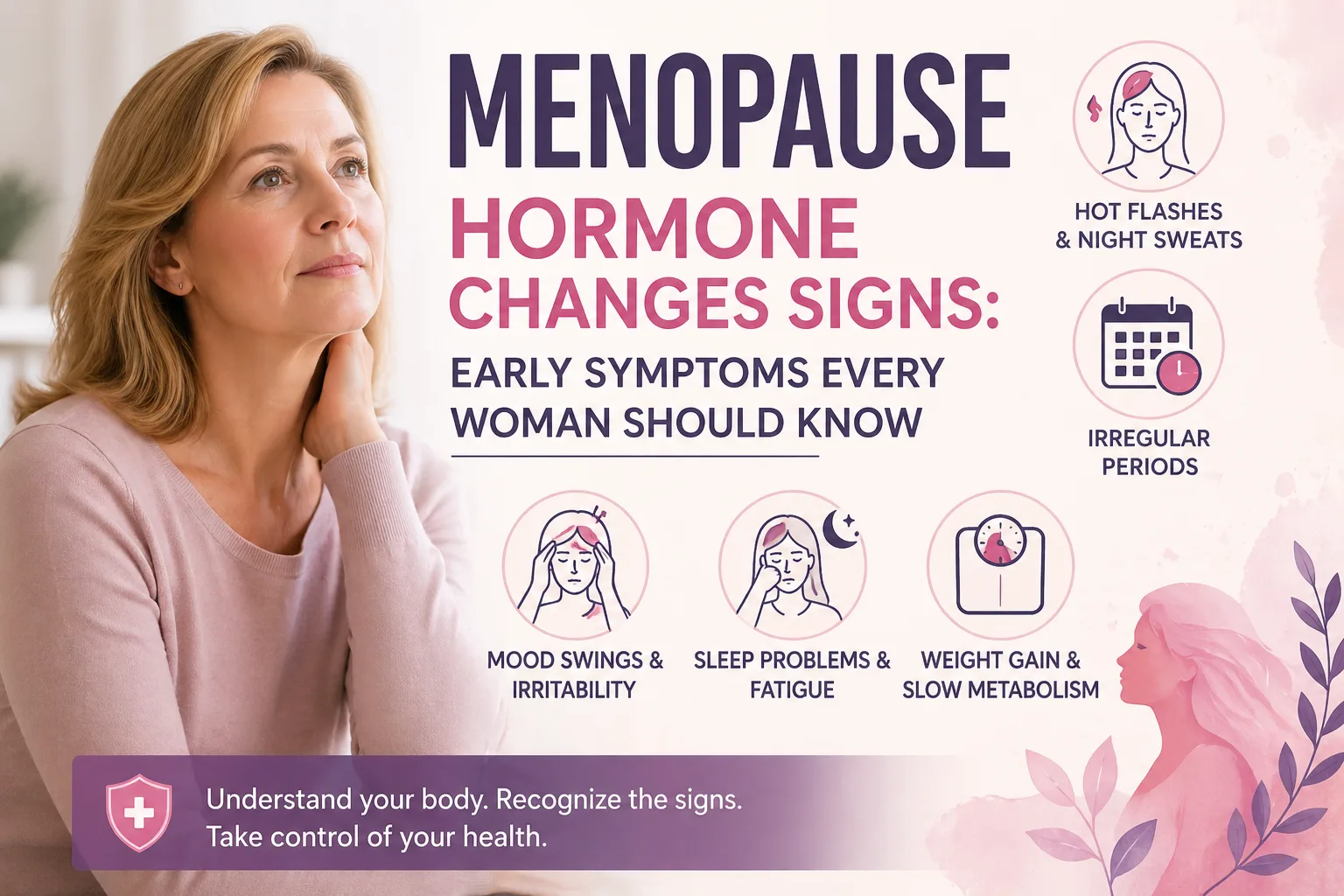
A shift in your period pattern is often the very first indicator. Your cycles may become unusually short (e.g., 21 days) or stretch out to 45 days. Blood flow might alternate between light spotting and intensely heavy cycles. This happens because ovulation becomes sporadic; without a maturing egg, your body fails to produce the progesterone needed to stabilize the uterine lining.
2. Hot Flashes and Night Sweats
Hot flashes feel like a sudden, intense wave of heat radiating across your face, neck, and chest. When they hit at night, they can soak your clothes and shatter your sleep quality. This occurs because estrogen acts as fuel for your hypothalamus—the brain’s internal thermostat. When estrogen dips, the hypothalamus mistakenly senses that the body is overheating, triggering an aggressive, emergency cooling mechanism (sweating).
3. Structural Shifts: Weight, Joints, and Digestion
As estrogen levels drop, your metabolism downshifts. You may notice your body storing fat differently—shifting from the hips and thighs directly to the abdomen.
Simultaneously, you may notice joint stiffness and menopause digestion issues cropping up. Because estrogen acts as a natural anti-inflammatory agent and fluid regulator throughout the body, losing it is like driving a car with worn-out shock absorbers; your joints and GI tract simply experience more friction and inflammation. This gastrointestinal slowing can also trigger intense menopause cravings control challenges as blood sugar management wavers.
Comparing the Core Shifts: A Quick Reference
Understanding whether a symptom is driven by an estrogen crash or a progesterone deficiency can help you address it accurately.
| Symptom Category | Primary Hormonal Driver | Physical Manifestation |
| Vasomotor | Deep Estrogen Drops | Sudden hot flashes, night sweats, skin flushing, chills |
| Metabolic & GI | Low Estrogen & Elevated Cortisol | Abdominal fat storage, slower digestion, altered food cravings |
| Sleep & Mood | Depleted Progesterone | Insomnia, high midnight anxiety, severe irritability |
| Tissue Integrity | Sustained Low Estrogen | Thinning hair, dry skin, vaginal tissue thinning, joint stiffness |
Clinical Insights on the Menopause Transition
Dr. Preet Pal’s Clinical Perspective
“In my clinical practice, I remind women that menopause is not a disease of ovarian failure—it is a full-body neurological and metabolic recalibration. When patients present with severe brain fog or sudden abdominal weight gain, they are often surprised to learn these are direct neurological and metabolic responses to shifting estrogen. Managing this phase requires a dual approach: stabilizing your baseline metabolic health while intentionally lowering physical and emotional stress factors.”
Targeted Support: A Natural Path to Balance
Managing these multi-system signs requires a lifestyle strategy that addresses both the hormonal drops and the stress pathways that amplify them. For women looking to ease this transition naturally, it is vital to learn how to properly choose menopause supplement options that feature clean, scientifically validated ingredients.
One highly regarded option in the wellness space is Menorescue. Rather than introducing synthetic hormones, this natural formula targets a hidden root cause of severe menopausal discomfort: elevated cortisol (the stress hormone).
When stress levels remain high, cortisol actively blocks your remaining pathways for estrogen and progesterone production, making hot flashes and mood swings far worse. By focusing on lowering cortisol, Menorescue helps stabilize the body’s natural hormone production, supporting smoother temperature regulation, steady energy levels, and easier weight management.
Verified Medical Sources
- Mayo Clinic: Menopause Symptoms and Causes
- National Institutes of Health (NIH): Research on the Menopause Transition
- Endocrine Society: Menopause Hormone Resource Guide
Author Bio
Written by Emily Carter, Menopause Health Researcher & Women’s Wellness Writer.
She specializes in menopause-related weight gain, hormonal changes, and natural strategies for women over 40.
Health Disclaimer
This content is for informational purposes only and is not intended to diagnose, treat, or cure any disease. Always consult your healthcare provider before making changes to your diet or health routine. This article may include affiliate links, which come at no extra cost to you.