
Dr. Preet Pal SB, MD
Physician specializing in diabetes, metabolic health, and joint care management. Read More About Dr. Preet Pal’s Medical Credentials & Editorial Integrity Here
Table of Contents
Midsection swelling, sudden waistline tightness, and persistent abdominal discomfort are among the most frustrating symptoms of perimenopause and menopause. Many women notice that their stomach suddenly feels distended like a stretched balloon after meals, even when eating moderate portions. Managing your diet by choosing targeted menopause bloating foods offers an immediate, evidence-based strategy to calm gut inflammation, balance fluid distribution, and improve sluggish motility.
When estrogen levels drop during the menopausal transition, gastrointestinal transit time slows down, fluid regulation degrades, and the gut microbiome shifts toward inflammatory bacterial species. Selecting nutrient-dense, low-FODMAP, potassium-rich, and probiotic-packed foods helps counteract these hormonal changes naturally.
1. Rebalance Fluid Dynamics with Potassium
Neutralizes cellular water retention
Prioritize potassium-rich foods like bananas, avocados, and cucumbers. Potassium works as a natural antagonist to sodium, drawing excess water out of tissues and into the kidneys for excretion.
2. Accelerate Sluggish GI Motility
Prevents fermentation and trapped gas
Incorporate soluble fiber from oats and chia seeds alongside natural prokinetics like fresh ginger tea. This speeds up gastric emptying, stopping food from sitting and fermenting in the stomach.
3. Repopulate the Gut Microbiome
Counters estrogen-depletion dysbiosis
Eat fermented, live-culture foods such as plain Greek yogurt or kefir daily. Reintroducing Lactobacillus species strengthens the gut mucosal barrier and reduces gas production.
4. Eliminate Micro-Inflammatory Triggers
Prevents intestinal wall swelling
Remove ultra-processed sodium bombs, artificial polyol sweeteners (sorbitol, xylitol), and carbonated beverages that inflate the GI tract with trapped air.
Why Hormonal Shifts Trigger Severe Midsection Swelling
To understand why your stomach reacts violently to previously tolerated meals, consider how ovarian hormones regulate your digestive system.
Estrogen acts as a natural regulator of fluid retention and tissue hydration. Think of estrogen as an efficient water pump system in a house. When estrogen drops precipitously, that pump system fails, causing water to pool in interstitial tissues and your abdominal cavity.
At the same time, progesterone levels plunge. Progesterone normally relaxes smooth muscle, but when both hormones fluctuate wildly, gut motility stalls. Food moves through the intestinal tract at a crawl—much like a highway construction zone that reduces a four-lane highway to a single lane. The longer food remains in the digestive tract, the more gut bacteria ferment it, creating trapped carbon dioxide and methane gas.
Furthermore, lower circulating estrogen degrades the diversity of your gut microbiome (often referred to as the “estrobolome”). This leads to dysbiosis, where pro-inflammatory microbes outnumber beneficial species, weakening the intestinal lining and provoking chronic micro-swelling.
Supporting your body through these midlife shifts requires a comprehensive nutritional framework. Alongside dietary changes, staying active and preserving lean tissue is essential; learning how to build muscle for menopause women helps elevate your resting metabolic rate and improves overall gut motility.
Why Menopause Causes Bloating
Before talking about menopause bloating foods, it helps to understand why menopause causes bloating in the first place.
During perimenopause and menopause, estrogen levels fluctuate constantly. These hormonal swings affect how your body stores water and processes food. Progesterone also drops, which may slow digestion and increase constipation. When food moves slowly through the digestive tract, gas builds up more easily.
At the same time, many women notice changes in metabolism and muscle mass. Digestion may become less efficient, and some foods that never caused problems before can suddenly trigger bloating.
Research from the Mayo Clinic explains that menopause symptoms often include digestive discomfort, abdominal swelling, and weight changes due to hormonal shifts.
Stress also plays a major role. Higher cortisol levels can affect gut function and increase inflammation. That means your stomach may react dramatically to foods that once seemed harmless. Yes, menopause can turn broccoli into a tiny betrayal.
Top Menopause Foods to Deflate Abdominal Bloating Fast
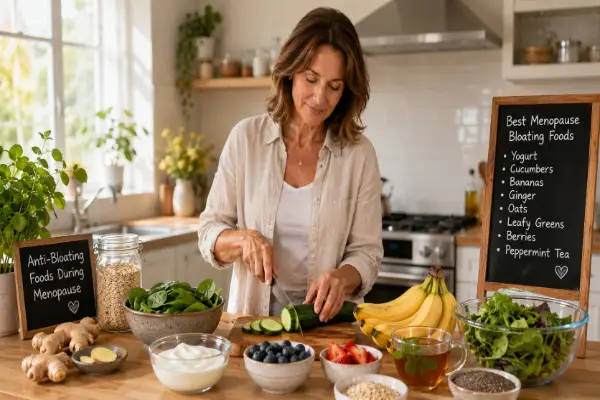
Incorporating functional menopause foods into your daily routine targeting gut barrier health, smooth muscle relaxation, and fluid balance yields rapid relief from abdominal tightness.
1. Cucumbers & Celery (Natural Aquaretics)
Cucumbers and celery consist of over 95% water and contain quercetin, a powerful flavonoid antioxidant that inhibits inflammatory responses in the gut wall. They provide cellular hydration while encouraging renal flushing without stripping essential electrolytes.
2. Fermented Greek Yogurt & Kefir
Lacking adequate estrogen, gut barrier permeability increases. Plain Greek yogurt and kefir supply live, active cultures (Lactobacillus acidophilus and Bifidobacterium lactis) that reinforce gut wall integrity and outcompete gas-producing bacteria.
3. Fresh Ginger Root
Ginger contains gingerol, a bioactive compound that accelerates gastric emptying. If your stomach feels heavy and distended hours after eating, ginger acts as a biological accelerator, clearing gastric contents into the small intestine before fermentation occurs.
4. Avocados & Bananas
Both foods provide massive doses of potassium and magnesium. Magnesium calms the autonomic nervous system and relaxes gastrointestinal smooth muscles, preventing painful intestinal spasms and trapped gas pockets.
5. Steamed Leafy Greens
While raw cruciferous vegetables (like raw kale or broccoli) can cause bloating due to complex raffinoses, lightly cooked spinach, Swiss chard, and romaine lettuce deliver soothing soluble fiber, iron, and bioavailable folate that digest effortlessly.
When adjusting your daily dietary intake, optimizing hydrating beverages is equally crucial. Pairing whole anti-inflammatory foods with functional menopause weight loss drinks can accelerate fluid turnover and support steady daily fat oxidation.
Foods That May Trigger Menopause Bloating
Some foods commonly trigger bloating during menopause, even when marketed as healthy.
Processed Foods
Highly processed foods often contain excess sodium, preservatives, and artificial ingredients. These increase water retention and digestive discomfort.
Frozen meals, chips, deli meats, and packaged snacks often create the perfect storm for bloating.
Reading labels matters. If the ingredient list looks like a chemistry experiment, your stomach may protest later.
Carbonated Drinks
Sparkling water and soda introduce extra gas into the digestive system. That trapped gas can increase bloating quickly.
Many diet sodas also contain artificial sweeteners, which may worsen digestive symptoms in sensitive individuals.
Excess Sugar
Sugar can feed unhealthy gut bacteria and increase inflammation. Many women notice more bloating after eating desserts, candy, or sugary drinks.
Reducing added sugar often improves digestion and energy levels at the same time.
Fried Foods
Fried foods digest slowly and may leave you feeling heavy and uncomfortable.
Greasy meals can also trigger acid reflux and stomach discomfort, especially during menopause when digestion changes naturally.
High Sodium Foods
Restaurant meals, canned soups, fast food, and packaged sauces often contain huge amounts of sodium.
Too much sodium encourages the body to hold onto water, leading to puffiness and swelling.
The American Heart Association recommends limiting sodium intake for overall health and fluid balance.
How Fiber Helps Menopause Bloating
Fiber often gets blamed for bloating, but the truth is more complicated.
A sudden increase in fiber can temporarily increase gas, especially if water intake stays low. However, the right amount of fiber supports healthy digestion and regular bowel movements.
The best menopause bloating foods contain balanced amounts of soluble fiber, which absorbs water and supports smoother digestion.

Good fiber sources include:
- Oats
- Chia seeds
- Berries
- Apples
- Lentils
- Sweet potatoes
Increase fiber slowly and drink enough water throughout the day. Your digestive system prefers teamwork, not surprise attacks.
Strategic Comparison: Anti-Bloating Foods vs. High-Risk Triggers
Understanding which foods heal your gut lining versus which ones cause acute distention is the fastest path to a flat, comfortable waistline.
| Food Category | Anti-Bloating Menopause Foods | High-Risk Bloating Triggers | Biological Impact on Gut |
|---|---|---|---|
| Proteins | Wild Salmon, Eggs, Fermented Kefir | Processed Deli Meats, Fried Poultry | High sodium in processed meats drives water retention; omega-3s in salmon soothe gut tissue. |
| Vegetables | Steamed Spinach, Cucumbers, Zucchini | Raw Broccoli, Brussels Sprouts, Onions | Raw crucifers contain complex sugars that ferment rapidly; cooked greens digest smoothly. |
| Fruits | Blueberries, Bananas, Cantaloupe | Watermelon, Cherries, Apples in Excess | High-fructose fruits overwhelm gut absorption capacity; berries provide gentle antioxidant relief. |
| Grains | Steel-Cut Oats, Quinoa | Refined White Bread, Sugary Pastries | Soluble oats form a protective gel layer in the gut; refined flour spikes insulin and retains fluid. |
| Beverages | Peppermint Tea, Ginger Water | Carbonated Waters, Diet Sodas, Alcohol | Bubbles release gas directly into the stomach; herbal teas relax digestive sphincters. |
Clinical Evidence: How Microbial Dysbiosis Causes “Menopause Belly”
Dr. Preet Pal’s Clinical Perspective
“In my clinical practice, over 70% of perimenopausal and menopausal women who present with sudden, unexplained midsection bloating are not experiencing weight gain—they are suffering from hormone-mediated gut dysbiosis and delayed transit time. When estrogen drops, the intestinal mucosal barrier thins, leading to localized low-grade inflammation. Re-establishing microbial balance through targeted probiotic strains and targeted fiber intake resolves abdominal distention far more effectively than restrictive caloric diets.”
When gut motility slows down, erratic appetite signals often follow. Fluctuating blood sugar combined with gut inflammation triggers intense sugar and salt cravings. Applying structured methods for menopause cravings control stops you from reaching for high-sodium, highly processed snacks that worsen fluid retention late in the evening.
Foods That Silently Worsen Midsection Swelling
Even health-conscious women frequently fall into dietary traps during menopause by consuming foods advertised as “healthy” that actually inflate the digestive tract.
- Artificial Sweeteners (Polyols): Sucralose, sorbitol, and xylitol found in “zero-sugar” snacks draw excess water into the large intestine via osmosis, leading to watery bloating and sharp gas pains.
- Carbonated Beverages: Even zero-calorie seltzers inject large volumes of carbon dioxide directly into your stomach, which expands the stomach walls and triggers reflux.
- Excess Sodium in Packaged “Health” Foods: Commercial salad dressings, canned soups, and veggie burgers often contain 600–1000mg of sodium per serving, causing immediate cellular fluid retention.
- Excessive Raw Coarse Fiber: Ingesting massive raw salads when your gut motility is already impaired is like dumping heavy logs into a slow-moving wood chipper. Always opt for lightly steamed, sautéed, or baked produce.
Targeted Gut Support: The Role of Microbiome Optimization
While eating potassium-dense produce and removing gas-producing foods forms the cornerstone of digestive health, restoring an estrogen-depleted microbiome often requires directed bacterial replenishment.
Because dropping estrogen directly reduces the abundance of protective gut bacteria, daily probiotic intervention focused on gut barrier restoration can prove transformative. Specialized formulations like PrimeBiome are engineered specifically to target digestion and gut bacteria imbalances during midlife transitions.
By delivering targeted probiotic strains designed to survive harsh stomach acid, PrimeBiome helps repair gut wall integrity, reduce gas formation, and ease stubborn abdominal tightness. Dr. Preet Pal notes that pairing a nutrient-dense diet with clinical-grade microbiome support offers a comprehensive solution for midsection comfort.
Hydration Matters More Than Most Women Realize
Ironically, dehydration can make bloating worse.
When the body lacks water, it holds onto fluids more aggressively. Drinking enough water helps reduce water retention and supports digestion.
Hydrating foods like watermelon, cucumber, celery, and oranges also help.
Many women mistake thirst for hunger during menopause. Sometimes the afternoon snack craving is actually your body asking for water instead of cookies. Sadly, your body rarely asks for brownies in a responsible way.
Can Probiotics Really Help?
Research suggests probiotics may help improve gut balance and digestive symptoms in some women.
Hormonal changes during menopause may alter gut bacteria composition. Supporting healthy bacteria may reduce bloating, constipation, and inflammation.
Fermented foods that contain natural probiotics include:
- Yogurt
- Kefir
- Kimchi
- Sauerkraut
- Miso
Not every probiotic works the same way, so results vary from person to person.
The Cleveland Clinic explains how probiotics may support digestive health and gut balance.
Lifestyle Habits That Reduce Menopause Bloating
Food matters, but lifestyle habits also affect bloating significantly.
Eat Slowly
Eating too quickly causes you to swallow extra air, which increases gas and bloating.
Chewing food properly also supports digestion and helps the stomach process meals more efficiently.
Move Your Body Daily
Light movement helps digestion work better. Walking after meals may reduce bloating and improve bowel movements.
You do not need extreme workouts. Gentle yoga, walking, and stretching often help more than punishing exercise routines.
Manage Stress
Stress affects the gut directly through the gut-brain connection.
Deep breathing, meditation, better sleep, and regular exercise may help calm digestive symptoms during menopause.
Watch Portion Sizes
Large meals stretch the stomach and slow digestion. Smaller balanced meals often feel better than heavy oversized portions.
Your digestive system during menopause prefers consistency over competitive eating championships.
A Simple One-Day Menopause Anti-Bloating Meal Plan
A balanced day of eating can help reduce digestive discomfort without making you feel deprived.
Breakfast could include oatmeal with blueberries, chia seeds, and plain Greek yogurt.
Lunch may include grilled chicken, cucumber salad, quinoa, and leafy greens.
For snacks, try banana slices with almond butter or berries with yogurt.
Dinner could include salmon, roasted sweet potatoes, and lightly cooked spinach.
Peppermint tea after dinner may help digestion before bedtime.
This style of eating supports hormone health, digestion, blood sugar balance, and energy levels simultaneously.
Common Myths About Menopause Bloating Foods
Myth 1: You Need a Detox Cleanse
Most detox teas and cleanses lack scientific support. Your liver and kidneys already detox the body naturally.
Extreme cleanses may actually worsen digestion and dehydration.
Myth 2: All Carbs Cause Bloating
Healthy carbohydrates like oats, fruit, and sweet potatoes provide fiber and important nutrients.
The issue usually comes from ultra-processed refined carbohydrates rather than whole foods.
Myth 3: Skipping Meals Helps
Skipping meals may increase overeating later and destabilize blood sugar levels.
Balanced meals often reduce cravings and improve digestion more effectively.
When to Talk to a Doctor
Occasional bloating during menopause is common, but severe or persistent symptoms deserve medical attention.
Talk to a healthcare professional if bloating comes with:
- Severe abdominal pain
- Unexplained weight loss
- Blood in stool
- Persistent constipation
- Ongoing digestive changes
Sometimes digestive symptoms may relate to conditions unrelated to menopause.
The National Institute on Aging recommends discussing persistent menopause symptoms with a healthcare
provider.
Frequently Asked Questions
What are the best menopause bloating foods to eat daily?
The best menopause bloating foods include yogurt with probiotics, bananas, cucumbers, oats, ginger, berries, leafy greens, and avocados. These foods help improve digestion, reduce water retention, support gut health, and lower inflammation during menopause.
Why does menopause cause bloating and stomach swelling?
Menopause can cause bloating because hormone levels like estrogen and progesterone change during this stage of life. These hormonal shifts may slow digestion, increase water retention, and affect gut bacteria, which can lead to gas, constipation, and abdominal discomfort.
Can menopause bloating foods really help reduce belly bloating naturally?
Yes, the right menopause bloating foods may help reduce belly bloating naturally by supporting healthy digestion and balancing fluid levels in the body. Foods rich in potassium, fiber, probiotics, and water content often help relieve bloating without extreme diets or detox products.
Which foods should I avoid if menopause bloating gets worse?
If menopause bloating becomes worse, try limiting processed foods, salty snacks, fried foods, carbonated drinks, and excess sugar. These foods may increase water retention, gas buildup, and digestive discomfort during menopause.
How long does it take for menopause bloating foods to work?
Many women notice improvements within a few days to a few weeks after adding healthy menopause bloating foods to their diet consistently. Results depend on hydration, stress levels, physical activity, and overall eating habits. Consistency usually matters more than quick fixes.
Final Thoughts
Menopause bloating foods can make a meaningful difference in how you feel every day. The right foods support digestion, reduce inflammation, balance fluids, and help your gut function more smoothly.
Simple choices often work best. Hydrating vegetables, probiotic-rich yogurt, fiber-rich oats, bananas, berries, and ginger can support your body naturally without extreme diets or miracle products.
At the same time, reducing processed foods, excess sodium, fried meals, and sugary snacks may help control bloating more effectively than trendy detox plans.
Menopause already brings enough surprises. Your stomach does not need to audition for a balloon animal competition too.
Focus on consistency instead of perfection. Small daily habits often create the biggest long-term improvements in digestive comfort, energy, and overall health.
Verified Medical Sources
- Mayo Clinic: Menopause Symptoms & Digestive Changes
- National Institutes of Health (NIH / NIAMS): Estrogen and Gastrointestinal Physiology
- Harvard T.H. Chan School of Public Health: The Microbiome and GI Health
- Arthritis Foundation: Anti-Inflammatory Diet Guidelines
Author Bio
Written by Emily Carter, Menopause Health Researcher & Women’s Wellness Writer.
She specializes in menopause-related weight gain, hormonal changes, and natural strategies for women over 40.
Health Disclaimer
This content is for informational purposes only and is not intended to diagnose, treat, or cure any disease. Always consult your healthcare provider before making changes to your diet or health routine. This article may include affiliate links, which come at no extra cost to you.