
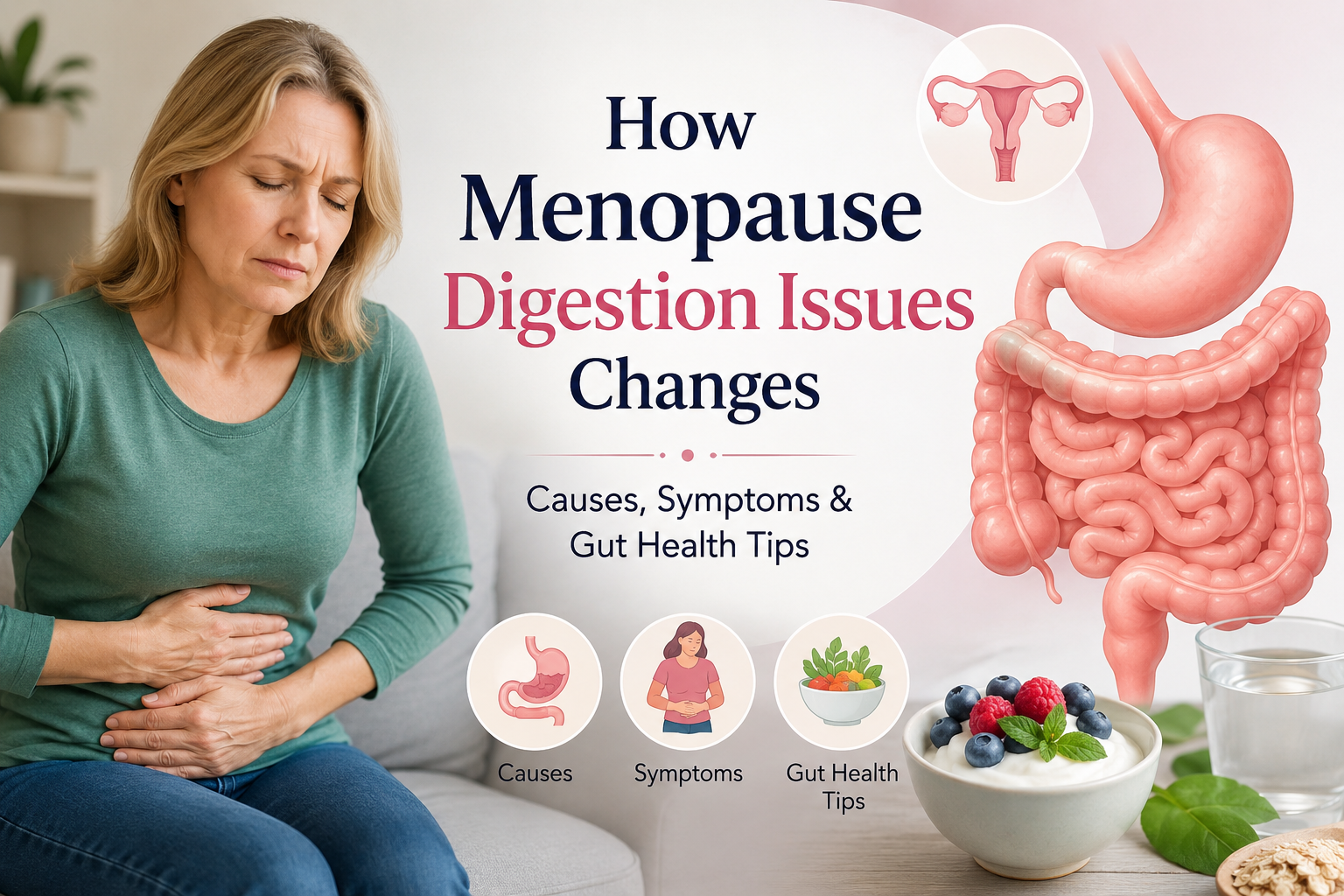
Menopause changes more than periods and hormones. Many women notice bloating after meals, slower digestion, heartburn, constipation, gas, and sudden food sensitivities during this stage of life. These menopause digestion issues often appear quietly at first. One day your favorite spicy tacos feel fine. The next day they seem ready to start a protest in your stomach.
Hormonal shifts during menopause affect the digestive system in several ways. Estrogen and progesterone help regulate gut movement, inflammation, metabolism, and even the balance of healthy bacteria in the digestive tract. When these hormones decline, digestion can slow down and become less predictable.
The good news is that these symptoms usually improve with the right habits. Understanding how menopause affects digestion can help women make smarter choices about food, exercise, sleep, stress management, and medical care.
This guide explains the science behind menopause digestion issues, the most common symptoms, and practical ways to support gut health naturally.
Why Menopause Affects Digestion
Hormones influence almost every system in the body, including the gut. During perimenopause and menopause, estrogen and progesterone levels fluctuate and eventually decline. These changes affect digestion in several important ways.
Estrogen supports healthy gut bacteria and helps control inflammation. Lower estrogen levels can disrupt the gut microbiome, which may increase bloating and digestive discomfort. Progesterone also plays a role because it helps relax smooth muscles throughout the body. When progesterone changes, food can move through the digestive tract more slowly.
At the same time, aging itself affects digestion. The body produces less stomach acid over time, which may make it harder to break down food properly. Muscle tone in the digestive tract can also weaken with age.
Stress adds another layer to the problem. Many women experience higher stress levels during menopause because of sleep problems, mood changes, work pressure, or caregiving responsibilities. Stress directly impacts gut function through the gut brain connection.
In simple terms, menopause digestion issues often result from a combination of hormone changes, aging, and lifestyle factors working together.
Common Menopause Digestion Issues
Digestive symptoms during menopause vary from person to person. Some women only experience mild bloating. Others struggle with daily discomfort that affects their quality of life.
Bloating and Gas
Bloating ranks among the most common menopause digestion issues. Hormonal fluctuations can slow digestion and increase water retention. This combination often creates a heavy or swollen feeling in the abdomen.
Changes in gut bacteria may also increase gas production. Foods that once felt harmless may suddenly trigger bloating. Beans, dairy products, fried foods, carbonated drinks, and artificial sweeteners often become harder to tolerate during menopause.
Many women joke that their stomach suddenly develops opinions. Unfortunately, the gut rarely shares those opinions politely.
Constipation
Constipation becomes more common during menopause because slower digestion allows waste to move more slowly through the intestines. Lower physical activity, dehydration, stress, and certain medications can worsen the problem.
Symptoms may include:
- Fewer bowel movements
- Hard stools
- Straining during bowel movements
- A feeling of incomplete emptying
Chronic constipation can also increase bloating and abdominal discomfort.

Heartburn and Acid Reflux
Many women notice more heartburn during menopause. Hormonal changes can relax the lower esophageal sphincter, which normally keeps stomach acid from flowing backward into the esophagus.
Weight gain around the abdomen may also increase pressure on the stomach and worsen reflux symptoms.
Spicy foods, alcohol, caffeine, chocolate, and large meals often trigger heartburn during menopause.
Food Sensitivities
Some women develop new food sensitivities during menopause. Researchers believe changes in the gut microbiome and immune system may play a role.
Common trigger foods include:
- Dairy products
- Gluten
- Spicy foods
- High fat meals
- Processed foods
This does not mean every woman suddenly needs a highly restrictive diet. It simply means the digestive system may become more sensitive during this phase of life.
Irritable Bowel Symptoms
Menopause can worsen symptoms of irritable bowel syndrome, also called IBS. Women with IBS often report increased abdominal pain, diarrhea, constipation, or bloating during perimenopause and menopause.
Stress and hormonal changes may both contribute to these flare ups.
The Connection Between Hormones and Gut Health
Scientists continue to study the relationship between hormones and the gut microbiome. The gut microbiome refers to the trillions of bacteria living in the digestive tract.
Healthy gut bacteria help:
- Digest food
- Produce vitamins
- Support the immune system
- Control inflammation
- Maintain bowel regularity
Estrogen appears to influence the diversity and balance of these bacteria.
Women experiencing ongoing bloating or signs of gut bacteria imbalance often look for additional digestive support options designed to promote a healthier gut environment.
When estrogen levels decline, the gut microbiome may shift in ways that increase inflammation and digestive symptoms.
Researchers sometimes refer to this relationship as the “estrobolome,” which describes gut bacteria involved in estrogen metabolism.
An unhealthy gut microbiome may also affect mood, energy levels, and weight management during menopause. That explains why menopause digestion issues often overlap with fatigue, anxiety, and brain fog.
The body truly loves teamwork. Sometimes that teamwork feels helpful. Other times it feels like your hormones and stomach formed a secret alliance against your jeans.
Can Menopause Cause Weight Gain and Digestive Slowness?
Yes, menopause often affects metabolism and digestion at the same time.
Lower estrogen levels may contribute to:
- Increased abdominal fat
- Reduced muscle mass
- Slower calorie burning
- Increased insulin resistance
At the same time, slower digestion may create feelings of fullness, heaviness, or bloating.
This combination can make women feel like they gain weight overnight even when their eating habits stay relatively similar.
However, menopause does not make healthy weight management impossible. Small lifestyle changes can improve both digestion and metabolism over time.
Best Foods for Menopause Digestion Issues
Diet plays a major role in managing digestive symptoms during menopause. The goal is not perfection. The goal is consistency and balance.
Fiber Rich Foods
Fiber helps support bowel regularity and healthy gut bacteria. Women over 50 generally need about 21 grams of fiber daily.
Good sources include:
- Oats
- Berries
- Apples
- Lentils
- Chia seeds
- Vegetables
- Whole grains
Increasing fiber slowly works best because sudden changes may worsen gas and bloating.

Fermented Foods
Fermented foods contain beneficial bacteria that support gut health.
Helpful options include:
- Yogurt with live cultures
- Kefir
- Kimchi
- Sauerkraut
- Miso
Some women tolerate these foods better than probiotic supplements.
Lean Protein
Protein supports muscle mass and metabolism during menopause.
It may also help reduce cravings and support more stable energy levels throughout the day. Lean protein also helps stabilize blood sugar levels, which may reduce cravings and energy crashes.
Good choices include:
- Fish
- Chicken
- Eggs
- Tofu
- Greek yogurt
- Beans
Healthy Fats
Healthy fats support hormone production and reduce inflammation.
Examples include:
- Avocados
- Olive oil
- Nuts
- Seeds
- Fatty fish like salmon
Water
Dehydration worsens constipation and bloating. Many women underestimate how much water they actually need.
A simple rule works well. If your lips resemble a desert documentary, drink more water.
Foods That May Trigger Digestive Problems
Not every woman reacts to the same foods, but some items commonly worsen menopause digestion issues.
Understanding which foods that trigger bloating affect your body can make digestive symptoms much easier to manage.
These include:
- Fried foods
- Ultra processed snacks
- Sugary drinks
- Excess alcohol
- Large heavy meals
- Excess caffeine
- Artificial sweeteners
Keeping a food journal may help identify personal triggers.
How Stress Affects Digestion During Menopause
Stress strongly affects the digestive system. During menopause, stress levels often rise because of poor sleep, anxiety, mood changes, or life transitions.
The gut and brain communicate constantly through the nervous system. Stress can slow digestion, increase inflammation, worsen bloating, and trigger IBS symptoms.
Chronic stress may also change gut bacteria over time.
Managing stress can improve digestion more than many people realize.
Helpful strategies include:
- Daily walking
- Yoga
- Meditation
- Deep breathing
- Strength training
- Better sleep habits
- Social connection
Even ten minutes of movement after meals can support digestion and reduce bloating.
Exercise and Digestive Health
Regular exercise helps food move through the digestive tract more efficiently. It also supports metabolism, hormone balance, stress reduction, and weight management.
Walking remains one of the best forms of exercise for menopause digestion issues because it is gentle and easy to maintain consistently.
Strength training also matters because muscle mass naturally declines during menopause. More muscle helps support metabolism and blood sugar control.
Experts generally recommend:
- At least 150 minutes of moderate exercise weekly
- Strength training two times weekly
- Daily movement whenever possible
No one needs to become a marathon runner overnight. Your digestive system usually feels grateful for simple consistency.
Sleep and Gut Health During Menopause
Poor sleep affects digestion more than many women realize. Menopause often disrupts sleep because of hot flashes, night sweats, anxiety, or insomnia.
Sleep deprivation may:
- Increase inflammation
- Disrupt gut bacteria
- Increase cravings for unhealthy foods
- Worsen constipation
- Raise stress hormones
Improving sleep quality may help reduce menopause digestion issues indirectly.
Helpful sleep habits include:
- Limiting caffeine late in the day
- Keeping bedrooms cool
- Avoiding heavy meals before bed
- Maintaining a regular sleep schedule
- Reducing screen time before sleep
When to See a Doctor
Many digestive symptoms during menopause are common, but some symptoms require medical evaluation.
Women should contact a healthcare provider if they experience:
- Blood in stools
- Unexplained weight loss
- Severe abdominal pain
- Persistent vomiting
- Difficulty swallowing
- Ongoing diarrhea
- Sudden major changes in bowel habits
These symptoms may indicate conditions unrelated to menopause.
Doctors may recommend testing for issues such as acid reflux disease, IBS, food intolerances, thyroid disorders, gallbladder disease, or colon conditions.
Can Hormone Therapy Help Digestion?
Hormone replacement therapy, often called HRT, may help some women with menopause digestion issues by stabilizing hormone levels.
Research on this topic remains mixed because hormone therapy affects women differently. Some women notice improvements in bloating and bowel regularity. Others may experience digestive side effects.
The decision to use hormone therapy should always involve a healthcare professional who understands the individual’s medical history and risk factors.
Natural Ways to Support Gut Health During Menopause
Simple lifestyle changes often make the biggest difference.
Women can support digestion during menopause by:
- Eating balanced meals
- Increasing fiber gradually
- Staying hydrated
- Exercising regularly
- Managing stress
- Sleeping well
- Limiting ultra processed foods
- Avoiding overeating
- Eating slowly
- Identifying trigger foods
Patience also matters. The digestive system rarely changes overnight. Small habits practiced consistently usually produce the best long term results.
Frequently Asked Questions
Can menopause cause digestive problems?
Yes, menopause can cause digestive problems because changing estrogen and progesterone levels affect the gut and digestive system. Many women experience menopause digestion issues such as bloating, constipation, gas, acid reflux, and slower digestion during perimenopause and menopause.
Why do I feel bloated during menopause?
Bloating during menopause often happens because hormonal fluctuations slow digestion and affect water retention. Changes in gut bacteria and stress levels may also increase menopause digestion issues and make the stomach feel swollen or uncomfortable after meals.
What are the most common menopause digestion issues?
The most common menopause digestion issues include bloating, constipation, heartburn, acid reflux, gas, food sensitivities, and irritable bowel symptoms. These digestive changes often appear during perimenopause and may continue after menopause.
How can I improve menopause digestion issues naturally?
You can improve menopause digestion issues naturally by eating more fiber rich foods, staying hydrated, exercising regularly, managing stress, and avoiding processed foods that trigger bloating or acid reflux. Probiotic rich foods like yogurt and kefir may also support gut health during menopause.
Does menopause slow down digestion?
Yes, menopause can slow down digestion because lower hormone levels affect how food moves through the digestive tract. Slower digestion may lead to constipation, bloating, and feelings of heaviness, which are common menopause digestion issues for many women.
Final Thoughts
Menopause digestion issues are real, common, and often frustrating. Hormonal changes affect the gut in complex ways that can lead to bloating, constipation, heartburn, food sensitivities, and slower digestion.
The good news is that most women can improve symptoms through healthy lifestyle habits, stress management, balanced nutrition, exercise, hydration, and quality sleep.
Understanding the connection between menopause and digestion helps women feel more prepared and less confused by these changes. The body may feel different during menopause, but that does not mean digestive discomfort has to control daily life.
A healthy gut can still thrive during menopause with the right support, realistic habits, and a little patience along the way.
Sources
- Mayo Clinic – Menopause
- Cleveland Clinic – Digestive Issues During Menopause
- Harvard Health Publishing – How Gut Health Changes With Age
- National Institute on Aging – Menopause Basics
- Johns Hopkins Medicine – Perimenopause and Menopause
- International Foundation for Gastrointestinal Disorders
Author Bio
Written by Emily Carter, Menopause Health Researcher & Women’s Wellness Writer.
She specializes in menopause-related weight gain, hormonal changes, and natural strategies for women over 40.
Health Disclaimer
This content is for informational purposes only and is not intended to diagnose, treat, or cure any disease. Always consult your healthcare provider before making changes to your diet or health routine. This article may include affiliate links, which come at no extra cost to you.