

Menopause changes your body in ways that feel sudden, frustrating, and sometimes unfair. One of the most common complaints is stubborn belly fat that seems to appear out of nowhere. You may eat the same foods, follow the same routine, yet your waistline slowly expands.
This is not just aging. There is real biology behind it.
Understanding the menopause belly fat science helps you stop guessing and start making smarter decisions. This article explains what actually happens inside your body, why belly fat increases, and what science says you can do about it.
Table of Contents
What Is Menopause and Why It Changes Fat Storage
Menopause marks the end of menstrual cycles. It usually happens between ages 45 and 55. The defining factor is a drop in key hormones, especially estrogen.
Estrogen does more than regulate reproduction. It influences fat storage, metabolism, insulin sensitivity, and appetite.
Before menopause, your body tends to store fat around the hips and thighs. This is called a gynoid fat pattern. After menopause, fat shifts toward the abdomen. This is known as an android fat pattern.
That shift is the foundation of menopause belly fat science.
Research shows that declining estrogen levels lead to increased abdominal fat accumulation. This type of fat, especially visceral fat, surrounds internal organs and raises health risks.

The Hormone Shift That Drives Belly Fat
Estrogen Decline and Fat Redistribution
Estrogen helps regulate where your body stores fat. When estrogen levels fall, your body begins to favor abdominal storage.
A study published in The Journal of Clinical Endocrinology and Metabolism found that lower estrogen levels link directly to increased visceral fat.
Your body is not failing. It is adapting to a new hormonal environment.
Insulin Sensitivity Changes
Another key part of menopause belly fat science involves insulin.
Estrogen helps maintain insulin sensitivity. When estrogen drops, your cells become less responsive to insulin. This leads to higher blood sugar levels and more fat storage, especially around the abdomen.
In simple terms, your body becomes better at storing fat and worse at burning it.
Cortisol and Stress
Menopause often brings sleep issues, mood changes, and stress. These factors increase cortisol levels.
Cortisol is known as the stress hormone, and it has a strong link to belly fat accumulation. High cortisol levels encourage fat storage in the abdominal area.
So if your stress levels rise during menopause, your belly fat may increase as well.
Metabolism Slows Down More Than You Think
Many people assume metabolism drops only because of age. That is only part of the story. Hormones play a bigger role.
During menopause, your resting metabolic rate decreases. This means your body burns fewer calories at rest.
At the same time, muscle mass naturally declines. Muscle burns more calories than fat. When you lose muscle, your calorie-burning ability drops further.
This creates a clear pattern:
Lower metabolism
Less muscle
Higher fat storage
This is a central concept in menopause belly fat science.
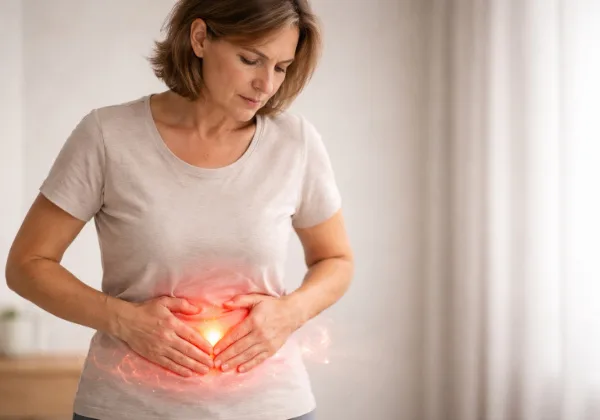
Visceral Fat vs Subcutaneous Fat
Not all belly fat is the same.
Subcutaneous Fat
This is the fat just under your skin. It is softer and less harmful.
Visceral Fat
This fat surrounds your organs. It is more dangerous and strongly linked to heart disease, type 2 diabetes, and inflammation.
Menopause tends to increase visceral fat more than subcutaneous fat.
This is why doctors take menopause-related belly fat seriously. It is not just about appearance. It is about long-term health.
Why Diet Alone Often Fails After 40
You may notice that diets that worked in your 20s or 30s no longer deliver results.
That is not your imagination.
Hormonal Resistance to Fat Loss
With lower estrogen and higher insulin resistance, your body becomes less responsive to calorie restriction.
This means simply eating less does not always lead to fat loss.
Muscle Loss Reduces Results
If your diet lacks protein or resistance training, you may lose muscle instead of fat. That slows metabolism further.
Increased Hunger Signals
Hormonal changes can affect hunger hormones like ghrelin and leptin. You may feel hungrier or less satisfied after meals.
This makes strict dieting harder to maintain.
All of these factors connect directly to menopause belly fat science.
The Role of Sleep in Belly Fat Gain
Sleep often gets ignored, but it plays a major role.
During menopause, many women experience insomnia, night sweats, or disrupted sleep.
Poor sleep affects hormone balance, appetite control, and fat storage.
Studies show that sleep deprivation increases cortisol and insulin resistance. Both contribute to belly fat accumulation.
If you are not sleeping well, your body may hold onto fat more aggressively.
Inflammation and Menopause Belly Fat Science
Another overlooked factor is chronic low-grade inflammation.
As estrogen declines, inflammation levels can increase. This affects how your body stores fat and processes nutrients.
Visceral fat itself produces inflammatory compounds. This creates a cycle:
More belly fat
More inflammation
More fat storage
Breaking this cycle is important for managing menopause weight gain.
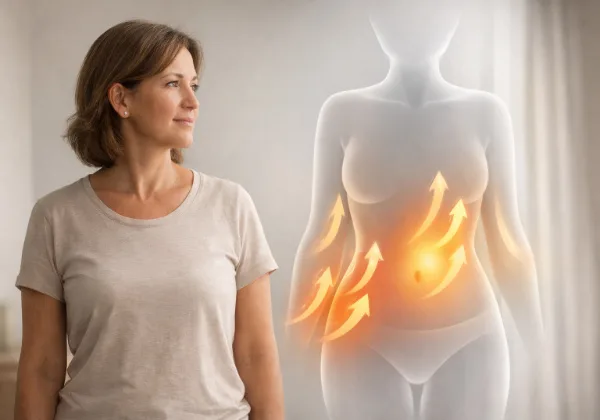
The Gut Microbiome Connection
Your gut bacteria influence metabolism, digestion, and fat storage.
Emerging research in menopause belly fat science shows that menopause can alter gut microbiota.
These changes may increase fat storage, reduce energy efficiency, and affect hunger signals.
A balanced gut microbiome supports better weight management during hormonal changes.
Genetics Still Matter
Hormones explain a lot, but genetics also play a role.
Some women naturally store more fat in the abdominal region. Menopause can amplify this tendency.
However, genetics do not decide everything. Lifestyle choices still have a strong impact.
What Science Says Actually Works
Now that you understand the biology, let’s focus on practical, science-backed solutions.
Strength Training Is Essential
Resistance training helps rebuild muscle and improve metabolism.
Studies show that strength training reduces visceral fat and improves insulin sensitivity.
Consistency matters more than intensity.
Protein Intake Matters More Than Ever
Protein supports muscle maintenance and helps control appetite.
Research suggests that higher protein intake improves body composition during menopause.
Aim to include protein in every meal.
Manage Carbohydrates Smartly
You do not need to remove carbs completely, but quality matters.
Focus on whole grains, vegetables, and fiber-rich foods.
These help regulate blood sugar and reduce fat storage.
Prioritize Sleep
Good sleep supports hormone balance and fat metabolism.
Simple steps include keeping a consistent sleep schedule, reducing screen time before bed, and maintaining a cool sleeping environment.
Reduce Stress
Chronic stress increases cortisol and belly fat.
Helpful strategies include walking outdoors, meditation, and deep breathing.
Small daily habits can create real change.
Understanding menopause belly fat science is just one step. You also need to actively rebalance your hormones, and this Balance Hormones Menopause Naturally Proven Guide After 40 can help you do exactly that.
Why Quick Fixes Do Not Work
The internet is full of promises. Detox teas, fat-burning supplements, and extreme diets claim to eliminate belly fat quickly.
Most of these approaches ignore menopause belly fat science.
They fail because they do not address hormonal changes, muscle loss, or insulin resistance.
In many cases, they slow metabolism further.
Sustainable changes always work better than quick fixes.
The Long-Term Perspective
Menopause is not a temporary phase. It is a permanent transition.
That means your strategy must be long-term.
Instead of chasing rapid weight loss, focus on improving metabolic health, building strength, and supporting hormone balance.
When you align your habits with menopause belly fat science, results become more consistent and sustainable.
Common Myths About Menopause Belly Fat
Myth 1: It Is Only About Calories
Calories matter, but hormones and metabolism also play major roles.
Myth 2: Cardio Alone Works
Cardio helps, but strength training has a stronger impact on belly fat.
Myth 3: Weight Gain Is Inevitable
Changes are natural, but excessive belly fat is not guaranteed.
Science shows that targeted lifestyle changes can help.
When to Seek Medical Advice
If belly fat gain feels extreme or comes with other symptoms, consult a healthcare professional.
Conditions like thyroid disorders or metabolic syndrome may contribute to weight changes.
Doctors may recommend hormone therapy, blood sugar testing, or personalized nutrition plans.
Medical guidance helps address the root cause.
Frequently Asked Questions
Why does belly fat increase during menopause?
Belly fat increases during menopause mainly due to hormonal changes. The menopause belly fat science shows that declining estrogen levels shift fat storage from the hips and thighs to the abdominal area. At the same time, metabolism slows down and insulin resistance increases, making it easier for the body to store fat around the belly.
Is menopause belly fat different from normal weight gain?
Yes, menopause belly fat is different from typical weight gain. According to menopause belly fat science, this fat is often visceral fat, which surrounds internal organs and carries higher health risks. Unlike regular fat, it is more influenced by hormonal changes than just calorie intake.
Can you lose menopause belly fat naturally?
Yes, you can lose menopause belly fat naturally with the right approach. The menopause belly fat science suggests focusing on strength training, high-protein meals, quality sleep, and stress management. These factors help improve metabolism, balance hormones, and reduce abdominal fat over time.
How long does it take to reduce menopause belly fat?
The timeline varies based on lifestyle and consistency. Menopause belly fat science shows that because hormonal changes slow metabolism, results may take longer than before. However, with consistent exercise, proper nutrition, and good sleep, noticeable changes can appear within a few weeks to a few months.
What is the most effective exercise for menopause belly fat?
The most effective exercise is strength training combined with light cardio. Menopause belly fat science highlights that building muscle helps boost metabolism and reduce visceral fat. Activities like weight training, resistance bands, and bodyweight exercises are especially effective when done consistently.
Final Thoughts
Menopause changes your body, but it does not remove your control.
The key lies in understanding menopause belly fat science. Hormones, metabolism, sleep, stress, and muscle all interact in complex ways.
Once you understand these factors, your approach becomes clearer.
Instead of fighting your body, you start working with it.
That is where real, lasting progress begins.
Sources
- https://academic.oup.com/jcem/article/92/11/4505/2597351
- https://www.ncbi.nlm.nih.gov/pmc/articles/PMC3984359/
- https://www.ncbi.nlm.nih.gov/pmc/articles/PMC4258327/
- https://www.ncbi.nlm.nih.gov/pmc/articles/PMC6520897/
- https://www.sleepfoundation.org/how-sleep-works/how-sleep-affects-weight
Author Bio
Written by Emily Carter, Menopause Health Researcher & Women’s Wellness Writer.
She specializes in menopause-related weight gain, hormonal changes, and natural strategies for women over 40.
Health Disclaimer
This content is for informational purposes only and is not intended to diagnose, treat, or cure any disease. Always consult your healthcare provider before making changes to your diet or health routine. This article may include affiliate links, which come at no extra cost to you.