

Menopause changes your body in ways that often feel unfair. You eat the same foods, follow the same routine, yet the scale keeps moving up. The missing piece for many women is stress. More specifically, cortisol weight gain menopause is a real and science-backed issue that deserves attention.
Cortisol, known as the stress hormone, plays a major role in how your body stores fat, burns energy, and responds to hormonal shifts. During menopause, your body becomes more sensitive to cortisol. This creates the perfect storm for stubborn belly fat and unexpected weight gain.
Let’s break it down clearly, without fluff, so you understand what’s really happening and how to fix it.
Table of Contents
What Is Cortisol and Why Does It Matter?
Cortisol is a hormone produced by your adrenal glands. Your body releases it during stress. This includes physical stress, emotional stress, lack of sleep, and even dieting.
Cortisol helps you survive. It increases blood sugar, boosts energy, and prepares your body to handle threats. That sounds helpful, and it is in short bursts.
The problem starts when stress becomes constant.
Chronic stress keeps cortisol levels high. This is where cortisol weight gain menopause becomes a real concern. High cortisol signals your body to store fat, especially around your abdomen.
This is not a coincidence. It is biology doing its job, just not in your favor.

Why Menopause Makes Cortisol More Powerful
During menopause, your estrogen levels drop significantly. Estrogen does more than regulate your reproductive system. It also helps control how your body responds to stress.
When estrogen declines, cortisol becomes more dominant.
This creates three major changes:
- Your body stores more fat, especially visceral fat
- Your metabolism slows down
- Your appetite increases, especially for sugar and carbs
This explains why many women notice belly fat appearing even without major lifestyle changes.
Cortisol weight gain menopause is not just about eating more. It is about how your body reacts differently to the same habits.
The Science Behind Cortisol Weight Gain Menopause
Research shows that high cortisol levels increase fat storage, particularly in the abdominal area. This type of fat is called visceral fat, and it surrounds your organs.
A study published by the National Institutes of Health found that chronic stress and elevated cortisol levels are linked to increased abdominal fat in women.
Cortisol also affects insulin. It raises blood sugar levels and can lead to insulin resistance over time. When this happens, your body stores more fat instead of burning it.
This cycle looks like this:
Stress → High cortisol → Higher blood sugar → More fat storage → More cravings → More stress
It becomes a loop that feels impossible to break.
Why Belly Fat Increases During Menopause
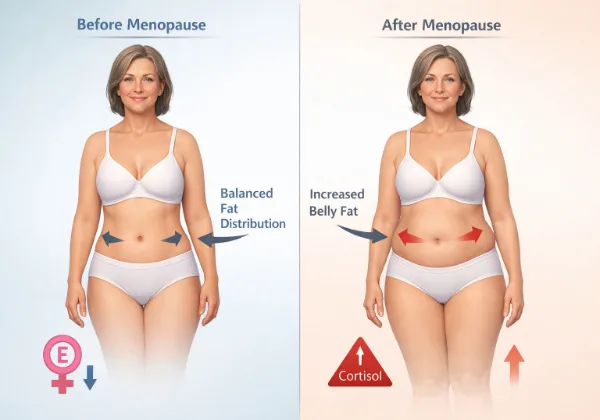
You may notice that weight gain during menopause looks different. It shifts from hips and thighs to your belly.
Cortisol plays a key role in this shift.
Fat cells in the abdominal area have more cortisol receptors. This means they respond faster and store fat more easily when cortisol levels rise.
Combine this with lower estrogen and slower metabolism, and you get the classic menopause belly.
This is why cortisol weight gain menopause often shows up as stubborn abdominal fat that does not respond to basic dieting.
How Stress Triggers Weight Gain Without You Realizing
You might think stress only affects your mood, but it also changes your behavior in subtle ways.
When cortisol is high:
- You crave sugary and high-calorie foods
- You feel hungrier even after eating
- You store more calories as fat
- You feel too tired to exercise
These are not signs of weakness. They are biological responses.
Your body tries to protect you from perceived danger. Unfortunately, modern stress is constant. Deadlines, poor sleep, and emotional stress keep cortisol elevated.
This is why cortisol weight gain menopause feels so frustrating. It is not just about willpower.
The Role of Sleep in Cortisol and Weight Gain
Sleep and cortisol are deeply connected.
When you do not get enough sleep, your cortisol levels rise. At the same time, your hunger hormones become unbalanced.
You produce more ghrelin, which increases hunger, and less leptin, which signals fullness.
This combination leads to overeating and weight gain.
Menopause often disrupts sleep due to hot flashes, night sweats, and anxiety. This creates a cycle where poor sleep increases cortisol, and high cortisol makes sleep worse.
Breaking this cycle is essential if you want to control cortisol weight gain menopause.
How Diet Affects Cortisol During Menopause
Many women try to lose weight by cutting calories drastically. This can backfire.
Extreme dieting increases cortisol. Your body sees it as stress and responds by slowing metabolism and storing fat.
Skipping meals also spikes cortisol levels. This leads to blood sugar crashes and intense cravings later.
Instead of helping, these habits worsen cortisol weight gain menopause.
Balanced eating works better. Regular meals, enough protein, and healthy fats help stabilize blood sugar and reduce cortisol spikes.
The Link Between Exercise and Cortisol
Exercise is important, but too much of the wrong type can increase cortisol.
High-intensity workouts every day without recovery can stress your body. This leads to elevated cortisol levels and potential weight gain.
This does not mean you should avoid exercise. It means you should choose wisely.
Strength training, walking, and moderate workouts help reduce cortisol and improve metabolism.
Overtraining does the opposite.
If you feel exhausted after workouts instead of energized, your cortisol may be too high.
Signs Your Cortisol Levels May Be Too High
You do not need a lab test to notice patterns.
Common signs include:
- Stubborn belly fat
- Constant cravings for sugar or salty foods
- Feeling tired but wired
- Difficulty sleeping
- Mood swings or anxiety
- Weight gain despite healthy eating
These signs often point to cortisol imbalance, especially during menopause.
Recognizing them early can help you take action before the problem worsens.
Practical Ways to Lower Cortisol Naturally
Managing cortisol does not require extreme changes. Small, consistent habits work best.
Start with stress management. Even 10 minutes of deep breathing, meditation, or quiet time can lower cortisol levels.
Focus on sleep. Aim for 7 to 8 hours of quality sleep. Create a calm bedtime routine and reduce screen time before bed.
Eat balanced meals. Include protein, fiber, and healthy fats in every meal. Avoid long gaps between meals.
Move your body regularly. Walking, yoga, and strength training support hormone balance without overloading your system.
Limit caffeine. Too much caffeine can increase cortisol, especially when consumed on an empty stomach.
These steps directly target cortisol weight gain menopause and help your body return to balance.
To complement what you’ve learned about cortisol weight gain menopause, you can explore this 9 Proven Ways to Lose Belly Fat After 40 Women Guide for a complete action plan.

Why Quick Fixes Do Not Work
It is tempting to look for fast solutions. Detox diets, extreme workouts, and weight loss pills promise quick results.
Most of these increase stress on your body.
This raises cortisol levels and leads to more weight gain over time.
Sustainable changes work better. Your body needs consistency, not shock.
If a plan feels extreme, it is probably increasing cortisol rather than reducing it.
The Emotional Side of Weight Gain During Menopause
Weight gain affects more than your body. It impacts confidence, mood, and overall well-being.
Stress about weight gain can actually increase cortisol levels. This creates another loop where worrying about weight leads to more weight gain.
Understanding the role of cortisol helps break this cycle.
When you realize that cortisol weight gain menopause is biological, not personal failure, you can approach it with strategy instead of frustration.
How Long Does It Take to See Results?
Lowering cortisol and reversing weight gain takes time.
You may start noticing changes in energy and sleep within a few weeks. Fat loss, especially around the belly, takes longer.
Consistency matters more than speed.
Focus on habits, not quick results. Your body needs time to adjust and heal.
Frequently Asked Questions
Does cortisol really cause weight gain during menopause?
Yes, cortisol plays a major role in cortisol weight gain menopause. When stress levels stay high, your body produces more cortisol, which signals fat storage, especially around the belly. During menopause, lower estrogen makes your body more sensitive to cortisol, which increases the risk of weight gain even without major changes in diet or activity.
Why is belly fat common in cortisol weight gain menopause?
Belly fat becomes more common in cortisol weight gain menopause because abdominal fat cells respond strongly to cortisol. High cortisol levels encourage fat storage in this area, and lower estrogen shifts fat distribution toward the midsection. This combination makes belly fat more stubborn and harder to lose.
How can I reduce cortisol weight gain menopause naturally?
You can manage cortisol weight gain menopause by focusing on stress reduction, better sleep, and balanced nutrition. Regular walking, strength training, and relaxation techniques like deep breathing or meditation help lower cortisol. Avoid extreme dieting, as it can increase cortisol and worsen weight gain.
Can poor sleep increase cortisol weight gain menopause?
Yes, poor sleep directly contributes to cortisol weight gain menopause. Lack of sleep raises cortisol levels and disrupts hunger hormones, leading to increased cravings and fat storage. Improving sleep quality can help regulate cortisol and support healthier weight management during menopause.
Is cortisol weight gain menopause reversible?
Cortisol weight gain menopause can be improved with consistent lifestyle changes. Lowering stress, improving sleep, and maintaining a balanced diet can help reduce cortisol levels over time. While results may take a few weeks, many women notice reduced belly fat and better energy with consistent habits.
Final Thoughts
Cortisol weight gain menopause is real, but it is not permanent.
Your body is not working against you. It is responding to stress, hormonal changes, and lifestyle patterns.
By understanding how cortisol works, you can make smarter choices that support your body instead of fighting it.
Small changes in sleep, diet, stress management, and exercise can create powerful results over time.
You do not need perfection. You need consistency and awareness.
Sources
- National Institutes of Health
- Mayo Clinic
- Harvard Health Publishing
- Cleveland Clinic
- Sleep Foundation
Author Bio
Written by Emily Carter, Menopause Health Researcher & Women’s Wellness Writer.
She specializes in menopause-related weight gain, hormonal changes, and natural strategies for women over 40.
Health Disclaimer
This content is for informational purposes only and is not intended to diagnose, treat, or cure any disease. Always consult your healthcare provider before making changes to your diet or health routine. This article may include affiliate links, which come at no extra cost to you.