


Dr. Preet Pal SB, MD
Physician Specialist in Internal Medicine, Metabolic Disorders, and Hormone-Driven Wellness. Read More About Dr. Preet Pal’s Medical Credentials & Editorial Integrity Here
When menopause approaches, many women notice that their usual fitness routines stop delivering results. Stubborn visceral fat accumulates around the abdomen, energy levels drop, and recovery takes longer. Trying to fix this with grueling 60-minute cardio sessions often backfires. When hormonal fluctuations are at play, intense endurance exercise elevates systemic cortisol, signaling your body to store abdominal fat rather than burn it.
A targeted menopause workout at home relies on low-cortisol resistance circuits and multi-joint movements to counter estrogen decline, preserve skeletal muscle, and improve insulin sensitivity in short, highly effective sessions.
15-Minute Home Menopause Protocol
Protocol Low-cortisol, high-yield strength circuit. Perform each exercise for 40 seconds of controlled work followed by 20 seconds of rest. Complete 2 total rounds.
Move 1: Bodyweight Squats
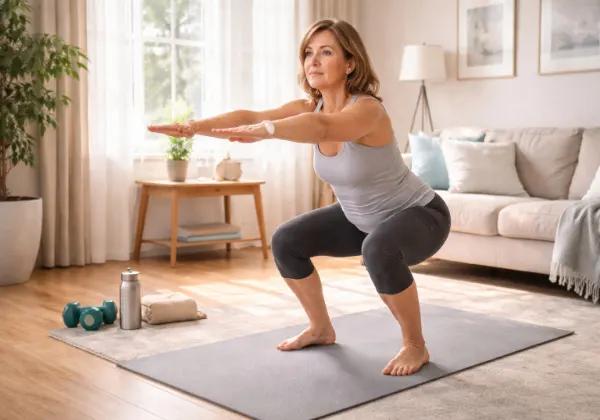
Stand with feet shoulder-width apart. Lower your hips back as if sitting in a chair, keeping your chest open. Drive through your heels to return to standing.
Move 2: Incline or Knee Push-Ups
Place hands on an elevated surface (countertop or couch) or floor knees-down. Maintain a straight spine from head to knees/heels while lowering your chest.
Move 3: Alternating Step-Back Lunges
Step back with one leg, bending both knees to a comfortable depth. Keep your forward knee aligned over your mid-foot. Alternate sides each rep.
Move 4: Low-Impact Marching High Knees
Drive opposite knee and arm upward in a controlled cadence. Avoid jumping to minimize joint strain while keeping the heart rate elevated.
Move 5: Forearm Plank Hold
Hold a stable plank on forearms and toes (or knees). Keep glutes squeezed and belly button drawn in to support the lumbar spine.
Move 6: Glute Bridges
Lie flat on your back with knees bent and feet flat. Squeeze your glutes to lift your hips toward the ceiling, pausing briefly at the top.

The Biological Shift: Why Exercise Needs to Change After 40
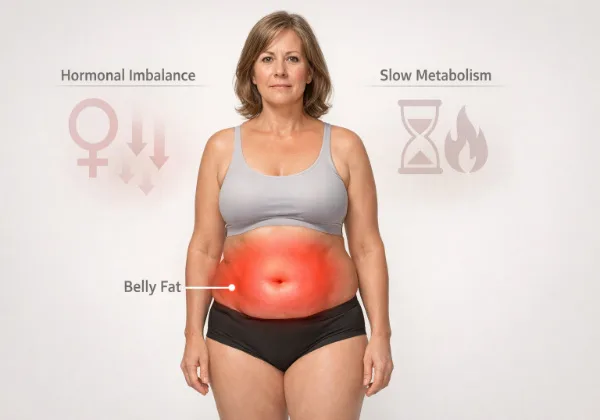
During perimenopause and menopause, declining circulating estrogen dramatically alters body composition and metabolic rate. Estrogen plays a vital role in glucose uptake, muscle protein synthesis, and visceral fat storage regulation. When estrogen levels plummet, three major physiological changes occur simultaneously:
- Accelerated Sarcopenia (Muscle Loss): Women lose up to 3–8% of their muscle mass per decade after age 30, a rate that accelerates sharply during the menopausal transition.
- Insulin Resistance: Reduced estrogen decreases cellular sensitivity to insulin. Carbohydrate processing becomes less efficient, making fat storage—particularly around organs in the midsection—much easier.
- Elevated Baseline Cortisol: Chronic stress, sleep disturbances, and intense cardiovascular exercise keep cortisol high. High cortisol combined with low estrogen prompts the liver to deposit visceral fat directly in the abdominal cavity.
Think of your muscle mass like the engine capacity of a car. When estrogen drops, your engine size naturally shrinks, causing your body to burn significantly fewer calories even when idling at a red light. Doing long hours of steady-state cardio on a small engine is like riding the brakes while pressing the gas pedal—it wears down your joints without boosting fuel efficiency.
To rebuild that engine capacity, resistance training is non-negotiable. If you want to dive deeper into systemic strategies, explore how to melt fat fast for women over 40 by aligning exercise intensity with your changing endocrine system.
Why a 15 Min Menopause Workout at Home Delivers Superior Results
Longer workouts are not always better for midlife hormone balance. A structured 15 min menopause workout at home provides the necessary physical stress to stimulate muscle tissue without sending your adrenals into overdrive.
Short resistance intervals leverage the body’s metabolic adaptations. By working near capacity for 40 seconds and resting for 20 seconds, you achieve high mechanical tension. This signals your body to retain nitrogen and repair muscle tissue without spiking cortisol levels that trigger systemic inflammation.
Comparing Fitness Approaches During Menopause
Comparing Fitness Approaches During Menopause
| Workout Strategy | Cortisol Impact | Muscle Preservation | Joint & Tendon Stress | Visceral Fat Targeting |
|---|---|---|---|---|
| 15-Min Strength Circuit | Low to Moderate | High | Low | High |
| 60-Min Steady-State Running | Sustained High | Low to Moderate | High | Low |
| High-Impact HIIT (Unmodified) | Extremely High | Moderate | High | Moderate |
| Gentle Walking & Mobility | Minimal | Low | Very Low | Moderate |
Form Cues and Technique for Key Exercises
Proper execution prevents injury and ensures maximum muscular recruitment.
1. Bodyweight Squats
- Mechanics: Stand with feet slightly wider than shoulder-width, toes turned out 5–10 degrees. Hinge at the hips first, pushing your glutes back before bending the knees.
- Form Warning: Keep your knees tracking in line with your toes. Avoid letting your knees cave inward (valgus collapse), which stresses the medial collateral ligament.
2. Modified Push-Ups
- Mechanics: Place hands wider than shoulder-width on an incline surface or mat. Lower your chest toward the surface while keeping elbows at a 45-degree angle to your torso.
- Form Warning: Avoid letting your lower back sag or your hips pike into the air. Engage your glutes and pull your ribs down toward your pelvis.
3. Step-Back Lunges
- Mechanics: From a standing position, take a generous step backward with your right leg. Lower your back knee straight down toward the floor until both knees form roughly 90-degree angles.
- Form Warning: Do not collapse forward over your front thigh. Keep your torso upright to maintain balance and decrease shear stress on the front kneecap.
Dr. Preet Pal’s Clinical Perspective
“In my clinical practice, I frequently see midlife women exacerbating fatigue and hormonal weight gain by pushing through intense 60-minute cardio routines. When estrogen drops, your margin for recovery narrows. Transitioning to short, resistance-based workouts preserves lean tissue while keeping systemic inflammation low. Coupling this with proper nutrition—such as incorporating specificfoods that help burn belly fat after 40—creates a sustainable metabolic environment where your body naturally sheds visceral fat.”
Maximizing Home Workouts with Strategic Nutrition and Timing
Exercise is only one half of the physiological equation during menopause. Without proper nutrient timing, short workouts cannot fully trigger muscle protein synthesis or offset insulin resistance.
Protein Pacing for Muscle Maintenance
Declining estrogen creates “anabolic resistance,” meaning midlife body tissue requires higher doses of essential amino acids (particularly leucine) to trigger muscle repair. Aim for 25 to 30 grams of high-quality protein per meal. Consuming a protein-rich meal within 60 to 90 minutes after your workout gives your body the necessary building blocks to rebuild muscle fibers.
Aligning Meals with Circadian Rhythms
Insulin sensitivity naturally fluctuates throughout the day, dropping in the late evening. Eating large, carbohydrate-dense meals right before bed can spike nighttime blood sugar and worsen hot flashes or sleep disruptions. To optimize your metabolic response, learn more about structuring your schedule with menopause meal timing strategies.
Addressing Target Hormonal & Cellular Support: A Clinical Review
While consistent resistance training and whole-food nutrition form the foundation of midlife wellness, targeted botanical and micronutrient supplementation can further help offset stubborn symptoms.
Menosoothe: Targeted Herbal and Micronutrient Support
Menosoothe is formulated to address the root endocrine imbalances that contribute to hot flashes, sleep fragmentation, and stubborn weight retention during perimenopause and menopause.
- Clinically Studied Botanicals: Features standardized extracts of Black Cohosh, Dong Quai, and Ashwagandha to support thermoregulation and downregulate stress signaling.
- Cortisol Management: Ashwagandha helps moderate output from the hypothalamic-pituitary-adrenal (HPA) axis, keeping resting cortisol levels lower throughout the day.
- Metabolic Support: Includes trace minerals that assist in cellular glucose uptake and energy production.
Dr. Preet Pal’s Evaluation: “Many of my patients struggle with sleep disturbances caused by night sweats, which directly spikes morning cortisol and triggers intense sugar cravings. Menosoothe’s combination of adaptogens and phytoestrogens helps stabilize thermoregulation and calm the central nervous system. When combined with a daily 15-minute strength routine, this formula helps support smoother hormone balance and steady recovery.”
Frequently Asked Questions
What is the best menopause workout at home for weight loss?
The best menopause workout at home combines strength training, low-impact cardio, and core exercises. A simple 15-minute routine with squats, modified push-ups, step jacks, and glute bridges helps boost metabolism and preserve muscle, which are essential for weight loss during menopause.
Can a 15-minute menopause workout at home really help lose weight?
Yes, a consistent 15-minute menopause workout at home can support weight loss when done regularly. Short workouts improve metabolism, increase muscle mass, and help regulate hormones. When combined with a balanced diet, they can lead to steady and sustainable fat loss.
How often should I do a menopause workout at home?
You should aim to do a menopause workout at home at least 4 to 5 times per week. Consistency matters more than intensity. Adding light activities like walking or stretching on rest days can further improve results and overall health.
Is a menopause workout at home safe for beginners?
Yes, a menopause workout at home is generally safe for beginners if you start with low-impact exercises and focus on proper form. Modifications like knee push-ups or step jacks instead of jumping make the routine easier and reduce the risk of injury.
Why is strength training important in a menopause workout at home?
Strength training is essential in a menopause workout at home because it helps prevent muscle loss and boosts metabolism. As estrogen levels drop, maintaining muscle becomes key to burning calories efficiently and reducing belly fat.
Final Thoughts
Menopause doesn’t mean giving up on your fitness goals. It simply means adjusting your strategy.
A simple, consistent menopause workout at home can help you:
- Boost metabolism
- Preserve muscle
- Reduce fat
- Improve mood and energy
And the best part? You only need 15 minutes a day.
No excuses. No complicated routines. Just smart, effective movement.
Verified Medical Sources
- National Institute on Aging (NIA): Exercise and Physical Activity During Menopause and Beyond
- Mayo Clinic: Menopause Weight Gain: Stop Midsection Spread
- National Institute of Arthritis and Musculoskeletal and Skin Diseases (NIAMS): Health Topics: Muscle Loss (Sarcopenia) and Bone Density
- CDC – Centers for Disease Control and Prevention: Physical Activity Guidelines for Adults and Older Adults
Author Bio
Written by Emily Carter, Menopause Health Researcher & Women’s Wellness Writer.
She specializes in menopause-related weight gain, hormonal changes, and natural strategies for women over 40.
Health Disclaimer
This content is for informational purposes only and is not intended to diagnose, treat, or cure any disease. Always consult your healthcare provider before making changes to your diet or health routine. This article may include affiliate links, which come at no extra cost to you.