
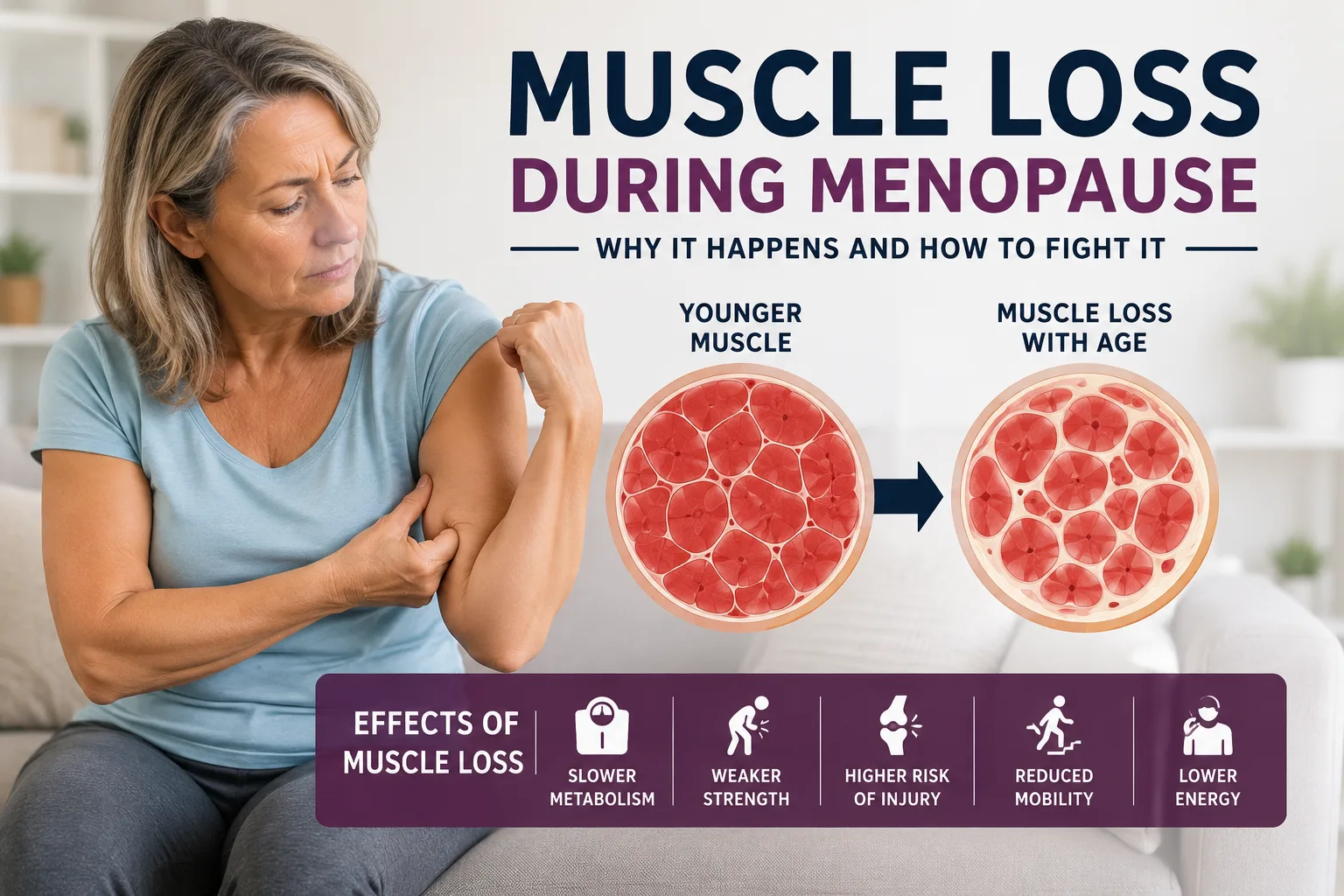
Menopause changes many things in a woman’s body. Sleep shifts. Hormones fluctuate. Energy levels feel unpredictable. Suddenly, the workouts that worked at 35 stop giving the same results at 50. Many women notice softer arms, weaker legs, stubborn belly fat, and slower recovery after exercise.
That does not mean strength is gone forever.
In fact, many experts believe menopause can become one of the best times for women to focus on muscle building. With the right training, nutrition, and recovery plan, women can still gain lean muscle, improve metabolism, and feel physically stronger than they did years earlier.
The key is understanding how menopause affects muscle growth and learning how to work with the body instead of against it.
If you want to build muscle menopause women strategies that actually work, this guide covers everything backed by trusted research and real-world fitness science.
Table of Contents
Why Muscle Loss Happens During Menopause
Menopause affects estrogen production. Estrogen does much more than regulate reproductive health. It also helps maintain muscle mass, bone density, recovery, and insulin sensitivity.
When estrogen levels decline, women often experience:
- Reduced muscle protein synthesis
- Increased fat storage
- Slower recovery after workouts
- More inflammation
- Reduced strength
- Lower energy levels
Research published by the North American Menopause Society explains that women can lose muscle mass faster during perimenopause and postmenopause if they stay inactive.
Age also plays a role. Starting around age 30, adults naturally lose muscle over time. Menopause accelerates that process.
The good news is simple.
Strength training and proper nutrition can significantly slow muscle loss and even reverse it.
That means women absolutely can build muscle during menopause.
Can Women Really Build Muscle After 50?
Yes. Without question.
Women in their 40s, 50s, and even 60s can still gain lean muscle tissue. Multiple studies confirm that resistance training improves muscle mass, strength, balance, mobility, and metabolic health in postmenopausal women.
A study published in the National Library of Medicine found that consistent resistance training improved muscle strength and physical function in menopausal women, even when participants had no previous weight training experience.
The body still responds to exercise stimulus.
Muscles still adapt.
Protein still supports muscle repair.
The difference is that recovery, nutrition, and workout quality matter more now than they did in earlier years.
This is where many women make mistakes.
They try endless cardio, random detox plans, or low-calorie diets. That approach usually leads to more muscle loss instead of muscle gain.
If your goal is to build muscle menopause women routines must focus on strength, recovery, and sustainable habits.
Strength Training Is the Foundation

Nothing builds muscle better than resistance training.
Walking helps health. Yoga improves flexibility. Cardio supports heart fitness.
But strength training changes muscle tissue.
Women often fear lifting weights because they think it will make them bulky. Realistically, menopause lowers anabolic hormones, so gaining massive muscle size naturally becomes very difficult.
Most women instead develop:
- Lean arms
- Stronger legs
- Better posture
- Improved metabolism
- Tighter body composition
- Better bone health
That sounds far more appealing than becoming “accidentally enormous,” which is basically fitness folklore at this point.
Best Strength Exercises for Menopausal Women
Compound movements work best because they train multiple muscle groups together.
Good examples include:
- Squats
- Deadlifts
- Lunges
- Push-ups
- Rows
- Chest presses
- Shoulder presses
- Glute bridges
These exercises improve muscle growth while supporting daily movement patterns.
Machines also work well for beginners because they improve stability and reduce injury risk.
The most important factor is consistency.
Three focused strength workouts weekly can create major improvements over time.
Progressive Overload Matters More Than Fancy Workouts
Many women repeat the same workout for years and wonder why progress disappears.
Muscles adapt quickly.
To continue building muscle menopause women need progressive overload. That simply means gradually increasing challenge over time.
You can do that by:
- Increasing weight
- Adding repetitions
- Improving workout intensity
- Slowing movement tempo
- Increasing training volume
Small changes produce big long-term results.
You do not need extreme workouts. You need steady progression.
Even adding five extra pounds to a squat over several weeks signals the body to build stronger muscle fibers.
Protein Intake Becomes More Important During Menopause

Protein supports muscle repair and growth.
Unfortunately, many menopausal women eat far too little protein. Breakfast often looks like toast and coffee instead of a muscle-supporting meal.
That creates problems because aging muscles respond less efficiently to protein intake. Scientists sometimes call this “anabolic resistance.”
According to research from the Harvard T.H. Chan School of Public Health, adequate protein intake supports healthy aging and muscle preservation.
Best Protein Sources
Women trying to build muscle menopause women nutrition plans should include high-quality protein at every meal.
Good options include:
- Eggs
- Greek yogurt
- Chicken
- Fish
- Cottage cheese
- Lentils
- Tofu
- Lean beef
- Protein shakes
- Beans
Experts often recommend roughly 20 to 30 grams of protein per meal for older adults focused on muscle maintenance and growth.
Spacing protein throughout the day works better than eating most of it only at dinner.
Stop Overdoing Cardio
This point surprises many women.
Hours of cardio will not magically sculpt lean muscle.
Excessive cardio combined with low-calorie eating can actually increase muscle loss during menopause.
Cardio still matters for heart health and endurance. The problem starts when women use cardio as their only exercise strategy.
Running endlessly while avoiding weights is like trying to build a house using only a paintbrush.
You need structure first.
A balanced plan works better:
- Strength training 3 to 4 times weekly
- Walking regularly
- Moderate cardio sessions
- Mobility work
- Recovery days
This combination supports fat loss without sacrificing muscle.
Sleep Directly Impacts Muscle Growth
Menopause often disrupts sleep through hot flashes, night sweats, and hormonal changes.
Poor sleep increases cortisol levels. High cortisol can interfere with recovery and muscle repair.
Sleep deprivation also increases cravings and lowers workout performance.
According to the Sleep Foundation, adults generally need at least seven hours of quality sleep for proper physical recovery.
Ways to Improve Sleep During Menopause
Simple habits can help:
- Keep a consistent sleep schedule
- Reduce caffeine late in the day
- Keep the bedroom cool
- Limit screen exposure before bed
- Avoid heavy meals late at night
- Exercise regularly
Strength training itself often improves sleep quality over time.
Ironically, lifting weights may help you stop feeling like a zombie before noon.
Recovery Is Not Laziness

Many women believe harder always means better.
That mindset often backfires during menopause.
The body needs recovery to build muscle tissue. Without recovery, inflammation and fatigue increase.
Recovery includes:
- Rest days
- Stretching
- Hydration
- Sleep
- Stress management
- Proper nutrition
Muscle growth actually happens after workouts during the repair process.
Training seven days weekly while running on caffeine and four hours of sleep usually leads to burnout instead of strength.
Hormones Affect Belly Fat and Muscle Storage
Many menopausal women notice increased abdominal fat.
This happens partly because hormonal changes affect fat distribution and insulin sensitivity.
Muscle building helps combat this problem.
More lean muscle improves metabolic health and helps the body use glucose more efficiently.
Resistance training also increases resting calorie burn because muscle tissue requires more energy than fat tissue.
That means building muscle menopause women programs can support both strength and body composition goals simultaneously.
Nutrition Mistakes That Hurt Muscle Growth
Many healthy-looking habits actually sabotage muscle gain.
Meal timing also plays a major role in muscle recovery and fat control during menopause. You can read our complete guide on Best Menopause Meal Timing For Weight Loss (Proven Strategy 2026) to learn how eating at the right time may improve energy, metabolism, and results.
Eating Too Little
Chronic undereating slows recovery and reduces muscle-building potential.
Women sometimes fear increasing calories because they worry about gaining fat. However, severe calorie restriction often causes muscle loss.
Avoiding Carbs Completely
Carbohydrates provide workout fuel.
Whole grains, fruits, potatoes, oats, and rice help support exercise performance and recovery.
Low-carb diets may work for some goals, but extremely restrictive eating often reduces training quality.
Skipping Meals
Long gaps without protein reduce muscle repair opportunities.
Balanced meals work better than surviving on coffee until 2 p.m.
Your muscles deserve more than caffeine and determination.
Supplements That May Help
Supplements cannot replace good training or nutrition. Still, some evidence-based options may support menopausal women.
Protein Powder
Helpful for meeting daily protein goals.
Creatine
Research suggests creatine may improve muscle strength and exercise performance in older adults.
The Cleveland Clinic notes that creatine remains one of the most researched sports supplements available.
Vitamin D
Low vitamin D levels may affect bone and muscle health.
Omega-3 Fatty Acids
These may help support recovery and reduce inflammation.
Always discuss supplements with a healthcare professional, especially if you take medications or have existing health conditions.
Mental Health and Confidence Matter Too
Menopause affects more than muscles.
Many women struggle with body image changes, confidence loss, and frustration when their old routines stop working.
Strength training often improves mental health alongside physical health.
Women frequently report:
- Better confidence
- Reduced stress
- Improved mood
- Better energy
- Greater independence
There is something deeply empowering about carrying heavy grocery bags without feeling like your shoulders filed a formal complaint.
Muscle building becomes about more than appearance.
It becomes about quality of life.
A Simple Weekly Muscle Building Plan
Women do not need complicated fitness schedules.
A realistic weekly structure works best.
Monday
Full-body strength training
Tuesday
Walking or light cardio
Wednesday
Strength training
Thursday
Mobility work or yoga
Friday
Strength training
Saturday
Outdoor activity or walking
Sunday
Recovery day
Consistency beats perfection every time.
How Long Does It Take to Build Muscle During Menopause?
Results vary based on:
- Training consistency
- Protein intake
- Sleep quality
- Recovery
- Starting fitness level
Some women notice strength improvements within a few weeks.
Visible body composition changes often appear after several months of consistent effort.
Muscle building takes patience during menopause, but progress absolutely happens.
Quick-fix promises usually fail because real muscle growth is a gradual biological process.
Sustainable habits win long-term.
Common Myths About Menopause and Muscle Building
“I’m Too Old to Gain Muscle”
False.
Research repeatedly shows older adults can build strength and muscle through resistance training.
“Cardio Is Better for Weight Loss”
Not always.
Strength training preserves muscle while supporting metabolism.
“Lifting Weights Is Dangerous”
Proper resistance training actually supports bone density, balance, and joint health.
“Protein Is Only for Bodybuilders”
Completely false.
Protein supports healthy aging, recovery, and muscle preservation for everyone.
The Best Mindset for Success
Menopause requires adjustment, not surrender.
Women often succeed when they stop chasing punishment-based fitness and start focusing on long-term strength.
That means:
- Eating enough nutrients
- Training intelligently
- Recovering properly
- Staying patient
- Prioritizing consistency
The body changes during menopause, but it still adapts remarkably well when treated properly.
Building muscle is not about becoming perfect.
It is about becoming stronger, healthier, and more resilient for the decades ahead.
Frequently Asked Questions
Can women really build muscle during menopause?
Yes, women can absolutely build muscle during menopause with proper strength training, enough protein, and consistent recovery. Hormonal changes may slow muscle growth slightly, but resistance exercise still helps build lean muscle, improve metabolism, and support healthy aging.
What is the best workout to build muscle menopause women can follow?
The best workout plan to build muscle menopause women need includes strength training at least three times weekly. Compound exercises like squats, lunges, rows, push-ups, and deadlifts work best because they train multiple muscle groups and improve overall strength.
How much protein do menopausal women need to build muscle?
Most experts recommend around 20 to 30 grams of protein per meal for women trying to build muscle during menopause. Protein supports muscle repair, recovery, and strength gains, especially after resistance training workouts.
Why is it harder to build muscle during menopause?
Lower estrogen levels during menopause can reduce muscle mass, slow recovery, and increase body fat storage. Aging also affects muscle protein synthesis. However, women who combine strength training, quality sleep, balanced nutrition, and recovery can still gain muscle effectively.
Can walking alone build muscle menopause women need?
Walking supports heart health, mobility, and calorie burning, but it usually does not build significant muscle mass. Women who want to build muscle during menopause should combine walking with resistance training and adequate protein intake for the best results.
Final Thoughts
Learning how to build muscle menopause women strategies successfully comes down to science-backed habits, not fitness gimmicks.
Strength training remains the most powerful tool for preserving and building lean muscle during menopause. Combined with adequate protein, recovery, sleep, and balanced nutrition, women can absolutely improve strength and body composition after 40 and beyond.
The process may look different than it did in your twenties, but different does not mean impossible.
Menopause does not end strength.
For many women, it finally becomes the beginning of it.