

Dr. Preet Pal SB, MD
Physician specializing in diabetes, metabolic health, and joint care management. Read More About Dr. Preet Pal’s Medical Credentials & Editorial Integrity Here
Table of Contents
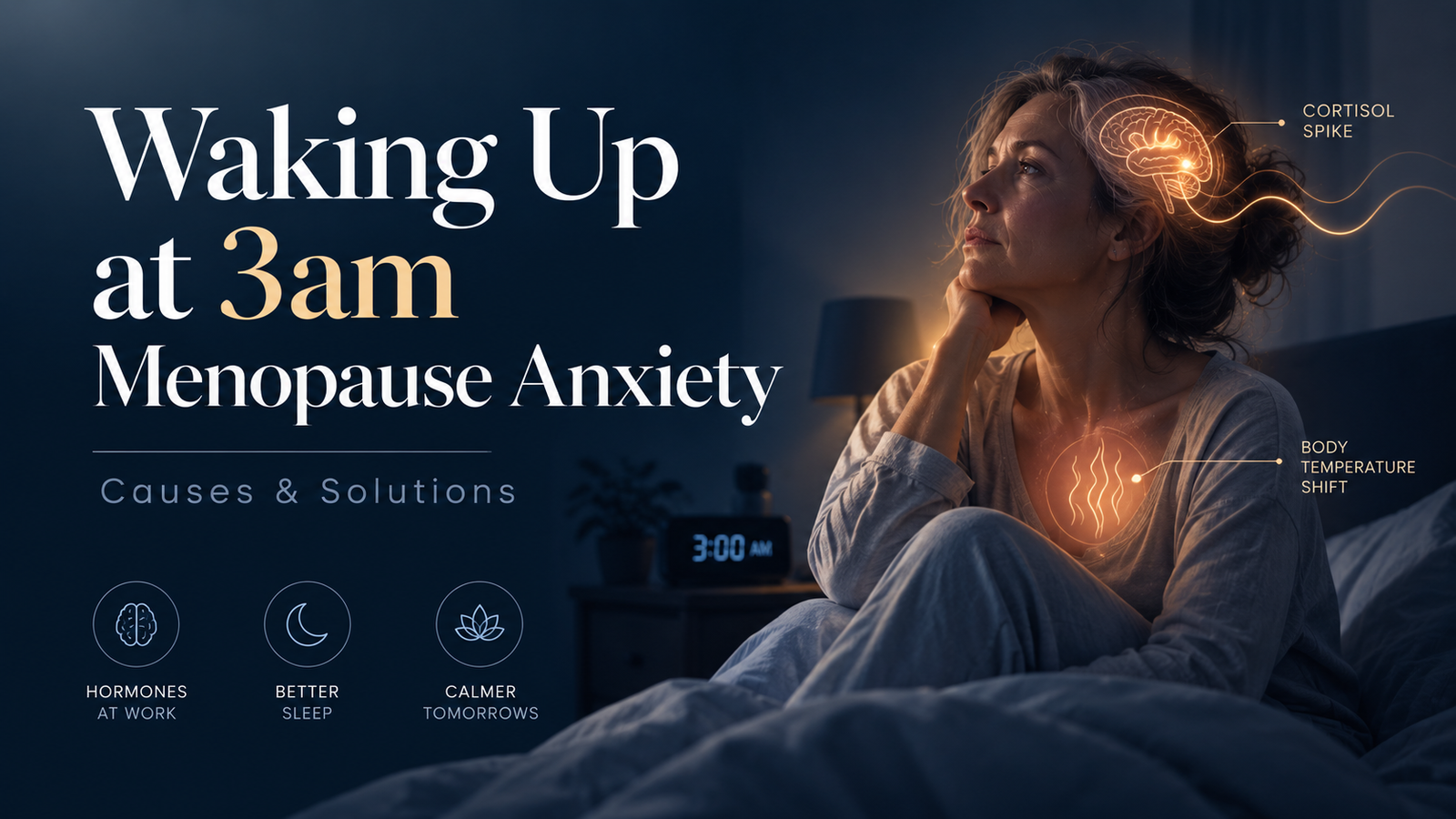
If you find yourself repeatedly waking up at 3am menopause anxiety might be the invisible culprit sabotaging your rest. Waking up in the middle of the night with a racing heart, a soaked nightgown, and a sudden wave of dread is a startlingly common experience for women in perimenopause and menopause.
This isn’t just “stress”—it is a direct physiological reaction triggered by shifting hormones and nocturnal panic responses.
Estrogen drops, triggering an internal temperature misfire
As estrogen levels fluctuate, your brain’s thermostat (the hypothalamus) becomes hyper-sensitive, perceiving normal body temperature as an immediate overheating emergency.
Adrenaline surges, igniting the 3 AM wake-up call
To cool you down, your nervous system triggers a sudden release of adrenaline and cortisol, instantly spiking your heart rate and jolting you from deep sleep into full alertness.
Anxiety sets in as your brain seeks explanation
Waking up in a high-cortisol state triggers your brain’s threat-detection network, turning mild mid-night wakefulness into sudden, intense anxiety or panic.
Waking up in a high-cortisol state triggers your brain’s threat-detection network, turning mild mid-night wakefulness into sudden, intense anxiety or panic.
The Biological Clock: Why 3 AM Is the Peak Zone for Menopausal Anxiety
Your body operates on a delicate circadian clock regulated by hormones. During a normal sleep cycle, cortisol (your primary stress hormone) reaches its lowest level around midnight and slowly begins rising around 2:00 AM to 4:00 AM to prepare your body for waking.

Think of your autonomic nervous system like a home heating and cooling system with a faulty thermostat. In a younger body, temperature adjustments happen quietly in the background. In menopause, the thermostat snaps open the emergency vents—flooding your system with adrenaline to pull off a sudden temperature dump.
When estrogen fluctuates, your brain’s stress axis gets recalibrated to a hair-trigger sensitivity. A minor dip in blood sugar or a subtle rise in body heat causes an oversized surge of cortisol right during that natural 3 AM biological shift.
Cortisol, Estrogen, and Progesterone: The Neurochemical Trio
To understand why this happens, look at how three key hormones interact inside your brain:
- Estrogen: Modulates serotonin and dopamine, the neurotransmitters responsible for mood regulation and emotional stability. Dropping estrogen destabilizes these calming pathways.
- Progesterone: Acts as your brain’s natural valium by stimulating GABA receptors. As progesterone drops during perimenopause, your brain loses its primary neurochemical brake pedal.
- Cortisol: Your survival hormone. When estrogen and progesterone decline, cortisol runs unchecked, turning standard nocturnal temperature adjustments into full-blown panic responses.
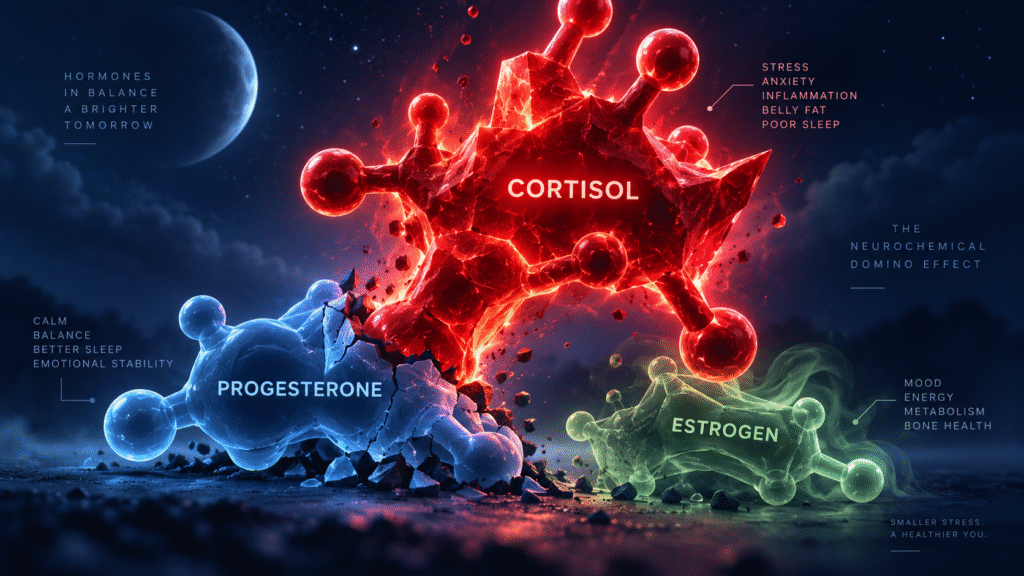
This hormonal imbalance often cascades into other system-wide symptoms. Many women experiencing night wakings also notice metabolic shifts, such as unexplained menopause belly fat accumulation, as elevated nocturnal cortisol encourages midsection fat storage.
Dr. Preet Pal’s Clinical Perspective
“Patients often tell me they feel like they are losing their minds at 3 AM. I reassure them that nocturnal anxiety during menopause is not a psychological failing—it is a neurochemical domino effect. When nocturnal progesterone drops, your threshold for stress drops with it. Treating the underlying cortisol cascade and stabilizing your nervous system is key to breaking the cycle.”
Comparing Nighttime Menopause Symptoms
It helps to distinguish whether your 3 AM wakings are driven primarily by vasomotor symptoms (hot flashes), neurochemical anxiety, or a combination of both.
The Gut-Brain-Hormone Connection: How Digestion Spikes Nighttime Anxiety
Your digestive tract plays a massive role in whether you sleep soundly or wake up in a panic. The gut produces over 90% of the body’s serotonin, and gut microbes regulate how estrogen is metabolized through a specialized set of bacteria called the estrobolome.
When progesterone drops, gastrointestinal motility slows down, often causing nocturnal discomfort. Eating heavy, inflammatory meals late at night triggers digestive stress, sending nerve signals up the vagus nerve directly to your brain’s fear center (the amygdala).
If your digestive system is struggling, paying attention to your diet—specifically avoiding certain menopause bloating trigger foods—can significantly reduce late-night gastrointestinal stress. Furthermore, systemic menopause digestion issues can directly impair nutrient absorption, depleting the body of key minerals like magnesium that are essential for calming the nervous system before sleep.
4 Evidence-Based Strategies to Stop 3 AM Menopause Anxiety

1. Re-Anchor Your Circadian Rhythm
To keep your 3 AM cortisol levels low, set your circadian clock early in the day. Get 10–15 minutes of direct morning sunlight within 60 minutes of waking. This sets a timer in your brain for nighttime melatonin production and lowers baseline evening cortisol.
2. Practice “Low-Stimulus” Night Waking
If you wake up at 3 AM with a racing mind:
- Do not look at the clock. Knowing the time instantly calculates how much sleep you are losing, triggering a fresh wave of adrenaline.
- Keep lights off. Bright light signals the brain that it is morning, suppressing melatonin.
- Use physiological sighs. Take two quick breaths in through the nose, followed by a long, slow exhale through the mouth. Repeat for two minutes to physically force your heart rate down.
3. Stabilize Evening Blood Sugar
A drop in blood sugar at night triggers the liver to release glycogen, a process fueled by cortisol and adrenaline. Eat a small snack containing complex carbohydrates and healthy fats before bed—such as a spoonful of almond butter on a seed cracker—to keep blood glucose stable overnight.
4. Optimize Sleep Hygiene for Thermoregulation
Keep your bedroom temperature between 60–67°F (15–19°C). Use breathable, moisture-wicking bedding made from natural fibers like bamboo or linen rather than synthetic fabrics that trap heat.
Managing Cortisol and Menopause Symptoms Naturally
While lifestyle adjustments provide a strong foundation, targeting the underlying cortisol-estrogen axis directly offers fast relief for persistent nocturnal symptoms.
MenoRescue is formulated specifically to target early menopausal symptoms, hot flashes, and mood swings by addressing the body’s primary stress hormone: cortisol. By promoting healthy cortisol levels, it helps smooth out the hormonal spikes that trigger middle-of-the-night panic and sudden temperature surges.
In clinical evaluation, managing nocturnal cortisol production helps keep the autonomic nervous system calm, allowing women to transition smoothly through deep sleep cycles without the sudden adrenaline disruptions typical of perimenopause.
Frequently Asked Questions
Why do I specifically wake up at 3 AM during menopause?
Your body’s natural cortisol levels naturally begin a subtle, gradual rise around 2 AM to 4 AM to prepare you for waking. In menopause, dropping estrogen and progesterone sensitize your nervous system, causing this mild physiological curve to turn into an oversized surge of adrenaline and cortisol that jolts you awake.
How can I tell the difference between panic attacks and menopausal night wakings?
Menopausal night wakings are physically driven by hormonal fluctuations—often preceded by an internal heat flare or night sweat—which then triggers heart palpitations and adrenaline. Primary panic attacks are usually mental or stress-induced triggers. However, nocturnal cortisol spikes during menopause can mimic a sudden panic attack almost identically.
Can late-night eating trigger 3 AM menopause anxiety?
Yes. Consuming high-sugar or heavy carb meals right before bed can cause a sudden spike in blood glucose followed by a sharp mid-night drop. When blood sugar drops too low while sleeping, your liver triggers an emergency release of glucose fueled by adrenaline and cortisol, waking you up in a panicked state.
What should I do immediately when I wake up with a racing heart at 3 AM?
Avoid checking the clock or turning on bright lights, as light suppresses melatonin and clock-watching triggers performance anxiety. Instead, practice “physiological sighing”: take two deep inhalations through your nose, followed by one long, slow exhale through your mouth to signal your vagus nerve to slow down your heart rate.
How does managing cortisol help with early menopause symptoms?
Cortisol acts as a dominant stress hormone that further destabilizes fluctuating estrogen and progesterone pathways. By regulating baseline cortisol through targeted adaptogens, blood sugar balance, and circadian alignment, you dampen the hair-trigger adrenaline spikes that cause nocturnal awakening, mood swings, and hot flashes.
Verified Medical Sources
- National Institutes of Health (NIH) – Sleep Disturbances in Menopause
- Mayo Clinic – Perimenopause Symptoms & Causes
- Endocrine Society – Hormones and Sleep Guidelines
- The North American Menopause Society (NAMS) – Mood & Anxiety Resources
Author Bio
Written by Emily Carter, Menopause Health Researcher & Women’s Wellness Writer.
She specializes in menopause-related weight gain, hormonal changes, and natural strategies for women over 40.
Health Disclaimer
This content is for informational purposes only and is not intended to diagnose, treat, or cure any disease. Always consult your healthcare provider before making changes to your diet or health routine. This article may include affiliate links, which come at no extra cost to you.