
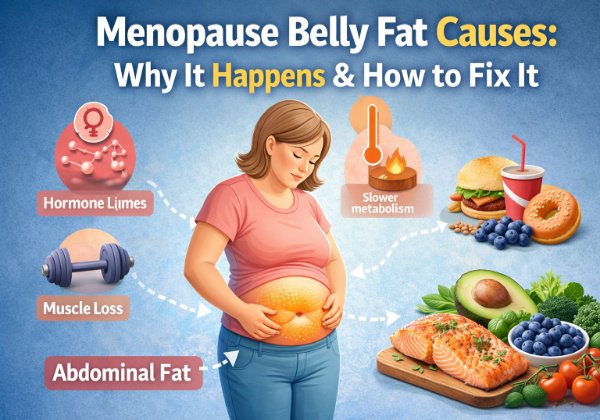
Many women notice a frustrating change during midlife: belly fat appears almost out of nowhere. Jeans feel tighter, the waistline expands, and the mirror seems slightly less cooperative.
If this sounds familiar, you are not alone. The phenomenon often called “menopause belly” is common and rooted in real biological changes. Research shows that menopause alters hormone levels, metabolism, and fat distribution in the body. These changes often shift fat storage toward the abdomen rather than the hips and thighs.
The good news? While menopause belly fat causes can feel inevitable, they are manageable and often reversible with the right lifestyle habits.
Let’s break down why belly fat increases after menopause and what you can actually do about it.
Table of Contents
What Is Menopause Belly Fat?
Menopause belly fat refers to fat accumulation around the midsection that becomes more common during or after menopause. Even women who never struggled with weight earlier in life may notice a growing waistline.
Before menopause, estrogen encourages fat storage in the hips and thighs, creating the classic “pear-shaped” body type. But as estrogen declines, fat distribution shifts toward the abdomen.
Researchers describe this change as a move from “gynoid fat distribution” (hips and thighs) to “android fat distribution” (abdomen).
This shift matters because abdominal fat—especially visceral fat around internal organs—links strongly to metabolic conditions such as heart disease and insulin resistance.
So menopause belly fat is not just cosmetic. It reflects deeper metabolic changes happening inside the body.
Menopause Belly Fat Causes
Understanding the real causes helps you address the problem effectively. Several biological and lifestyle factors contribute to belly fat after menopause.
1. Declining Estrogen Levels
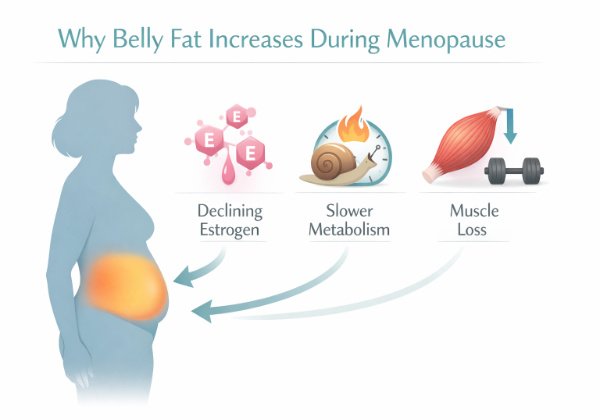
The most significant menopause belly fat cause is declining estrogen.
Estrogen plays an important role in regulating how the body stores fat. During reproductive years, it helps maintain healthier fat distribution and limits visceral fat accumulation.
When estrogen levels fall during menopause:
- Fat storage shifts toward the abdomen
- Visceral fat increases
- The body becomes more prone to metabolic dysfunction
Studies show that postmenopausal women experience significant increases in abdominal fat compared to their premenopausal years.
In simple terms: when estrogen drops, the body changes where it prefers to store fat.
2. Age-Related Muscle Loss
Another major factor involves loss of muscle mass, also known as sarcopenia.
As people age, muscle naturally declines. Muscle burns more calories than fat, even when the body rests. So when muscle mass decreases, the body burns fewer calories.
The Mayo Clinic explains that lower muscle mass slows metabolism, making weight gain easier even if eating habits stay the same.
Less muscle means:
- Lower calorie burn
- Slower metabolism
- Higher risk of abdominal fat gain
This process explains why many women gain belly fat without increasing food intake.
3. Changes in Fat Distribution
Menopause does not only increase fat levels. It changes where fat lives in the body.
Research shows that body composition shifts during menopause:
- Fat moves from thighs and hips
- Abdominal fat increases
- Lean body mass decreases
Visceral fat becomes more common, which surrounds organs like the liver and intestines.
This type of fat is metabolically active and associated with:
- Heart disease
- Type 2 diabetes
- Inflammation
That is why doctors pay attention to waist circumference as an important health indicator.
4. Slower Metabolism
Metabolism naturally slows with age, but menopause can accelerate the change.
Lower estrogen levels affect how the body uses energy and regulates insulin. Research suggests that estrogen deficiency contributes to increased body fat and reduced energy expenditure.
A slower metabolism means the body stores more calories as fat rather than burning them.
Even small lifestyle habits—like a nightly dessert or reduced physical activity—can suddenly lead to noticeable belly fat.
5. Lifestyle Factors
Hormones play a major role, but daily habits still matter a lot.
Experts highlight several lifestyle factors that often contribute to menopause belly fat:
- Reduced physical activity
- Poor sleep quality
- Higher stress levels
- Increased alcohol intake
- Diets high in refined carbohydrates
During midlife, busy schedules and stress can make healthy habits harder to maintain. Unfortunately, those small lifestyle changes often accumulate around the waistline.
Why Menopause Belly Fat Is Harder to Lose
Many women say: “I used to lose weight easily. Now nothing works.”
That frustration has a scientific explanation.
Menopause belly fat tends to be visceral fat, which behaves differently than subcutaneous fat under the skin. Visceral fat responds strongly to hormones and insulin signals, making it stubborn to lose.
Additionally, declining estrogen and muscle mass reduce calorie burn, so traditional dieting often produces slower results.
The key insight: the strategy that worked at age 30 often fails at age 50. Midlife weight management requires slightly different tactics.
How to Fix Menopause Belly Fat
The good news: menopause belly fat is not permanent. Evidence-based lifestyle changes can significantly reduce abdominal fat and improve metabolic health.
Here are the strategies backed by research.
1. Focus on Strength Training
Strength training becomes essential during menopause.
Resistance exercises help rebuild muscle mass and increase metabolism. More muscle means the body burns more calories throughout the day.
Effective strength exercises include:
- Squats
- Lunges
- Resistance bands
- Weight lifting
- Bodyweight exercises like push-ups
Experts often recommend two to three strength-training sessions per week for midlife women.
Besides reducing belly fat, strength training also protects bone density—another critical health concern after menopause.
2. Prioritize Protein Intake
Protein supports muscle maintenance and helps regulate appetite.
Studies consistently show that higher protein diets support weight management and muscle retention during aging.
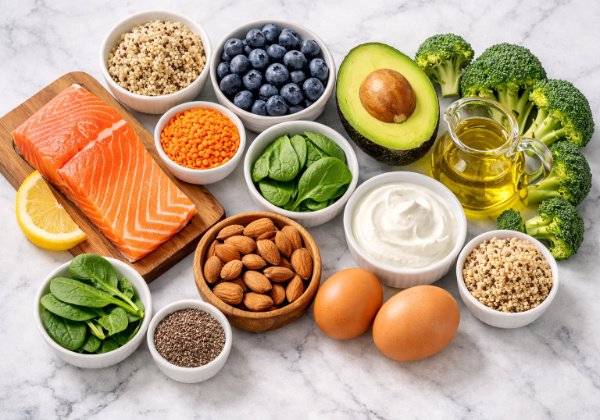
Good protein sources include:
- Eggs
- Fish
- Greek yogurt
- Beans and lentils
- Chicken or turkey
- Tofu
Aim to include protein in every meal. This simple habit helps stabilize blood sugar and reduce cravings.
3. Reduce Added Sugar and Refined Carbs
Refined carbohydrates can worsen abdominal fat storage.
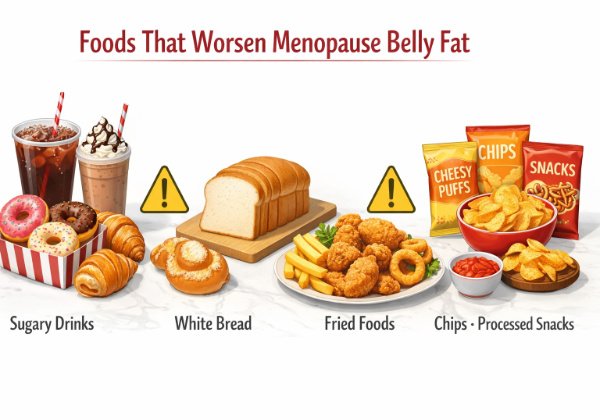
Foods that commonly contribute to belly fat include:
- Sugary drinks
- White bread
- Pastries
- Ultra-processed snacks
These foods cause rapid blood sugar spikes, which can increase insulin levels and encourage fat storage.
Replacing them with whole foods—like vegetables, whole grains, and healthy fats—supports better metabolic balance.
4. Increase Daily Physical Activity
Structured workouts matter, but daily movement matters even more.
Simple habits can make a major difference:
- Walking 7,000–10,000 steps per day
- Taking the stairs
- Gardening
- Cycling
- Doing active household chores
Regular physical activity helps burn visceral fat and improves insulin sensitivity.
Consistency beats intensity.
5. Improve Sleep Quality
Sleep often declines during menopause due to hot flashes or hormonal shifts.
Unfortunately, poor sleep strongly contributes to belly fat.
Lack of sleep increases cortisol, a stress hormone linked to abdominal fat accumulation.
Simple sleep improvements include:
- Keeping a consistent bedtime
- Reducing screen exposure before bed
- Avoiding caffeine late in the day
- Maintaining a cool sleeping environment
Better sleep supports hormone balance and weight management.
6. Manage Stress
Stress does not just affect mood—it affects metabolism.
Chronic stress increases cortisol levels, which can promote abdominal fat storage.
Effective stress management techniques include:
- Yoga
- Meditation
- Deep breathing exercises
- Nature walks
- Social connections
Even 10 minutes of daily stress reduction can make a meaningful difference.
If you’re wondering what to eat, certain foods for menopause belly fat can support metabolism, hormone balance, and appetite control. In this guide, we break down the 12 best foods for menopause belly fat backed by science that may help reduce abdominal fat.
What are the best foods for menopause belly fat?
The best foods for menopause belly fat include high-protein and high-fiber options that support metabolism and hormone balance. Examples include salmon, eggs, lentils, leafy greens, berries, Greek yogurt, nuts, and avocados. These foods help reduce cravings, stabilize blood sugar, and support fat loss around the abdomen.
Why does belly fat increase after menopause?
Belly fat increases after menopause mainly because estrogen levels decline. Lower estrogen changes how the body stores fat and often shifts fat toward the abdominal area. Age-related muscle loss and slower metabolism also contribute to weight gain, making menopause belly fat more common in midlife.
Can foods for menopause belly fat really help reduce abdominal fat?
Yes, choosing the right foods for menopause belly fat can support healthy weight management. Nutrient-dense foods rich in protein, fiber, and healthy fats improve metabolism and help control hunger. While diet alone cannot eliminate belly fat instantly, consistent healthy eating combined with exercise can gradually reduce abdominal fat.
What foods should women avoid to reduce menopause belly fat?
Women trying to reduce menopause belly fat should limit ultra-processed foods, sugary drinks, refined carbohydrates, and excessive alcohol. These foods can increase blood sugar spikes and promote fat storage. Replacing them with whole foods such as vegetables, lean protein, and whole grains helps support better metabolic health.
How long does it take to lose menopause belly fat with the right diet?
The time needed to lose menopause belly fat varies depending on lifestyle habits, diet, and physical activity. With consistent healthy eating and regular exercise, many women begin noticing changes within a few months. Including nutrient-dense foods for menopause belly fat can support gradual and sustainable fat loss.
When to Talk to a Doctor
Sometimes menopause belly fat comes with additional symptoms like:
- Rapid weight gain
- Fatigue
- Insulin resistance
- Thyroid issues
If weight gain feels sudden or extreme, a healthcare provider can evaluate potential underlying causes.
Some women may also discuss hormone therapy, which research suggests can influence body fat distribution in certain cases.
However, treatment decisions should always involve a medical professional.
The Bottom Line
Menopause belly fat causes are rooted in real biological changes. Declining estrogen, muscle loss, slower metabolism, and lifestyle shifts all contribute to increased abdominal fat.
But menopause belly fat is not unavoidable.
Healthy habits—especially strength training, balanced nutrition, quality sleep, and stress management—can dramatically improve body composition and metabolic health.
Think of midlife not as a metabolic disaster, but as a new chapter that requires smarter strategies.
Your body is changing. But with the right approach, your health and confidence can improve right along with it.
Sources
- Mayo Clinic
- Harvard Health
- National Library of Medicine
- National Library of Medicine
- Science Direct
- National Library of Medicine
Author Bio
Jennifer Collins is a wellness researcher and natural health writer focused on adults over 40. With 3+ years of experience in digital health content, Jennifer specializes in making science-backed nutrition and lifestyle strategies easy to follow and apply.
Health Disclaimer
This content is for informational purposes only and is not intended to diagnose, treat, or cure any disease. Always consult your healthcare provider before making changes to your diet or health routine. This article may include affiliate links, which come at no extra cost to you.