
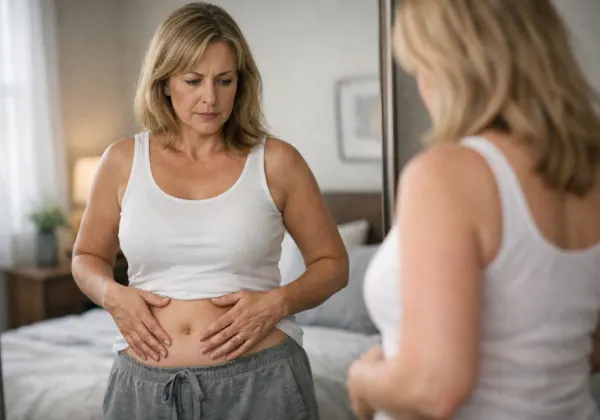
If you’ve crossed 40 and suddenly your jeans feel tighter—even though your eating habits haven’t changed—you’re not imagining things. Many women experience weight gain after 40, and it often feels confusing, frustrating, and unfair.
Here’s the truth: your body does change after 40. And those changes have very real, science-backed reasons.
This guide breaks down the real weight gain after 40 women causes, using trusted research, simple explanations, and a little humor (because honestly, we all need it).
Table of Contents
What Really Changes After 40?
Let’s get one thing clear: this is not about “losing discipline.” It’s about biology.
After 40, your body starts shifting in ways that affect how it stores fat, burns calories, and manages hormones. Even if you eat the same foods, your body may respond very differently.
Think of it like this:
Your body used to run like a fast sports car.
Now it’s still strong—but it needs better maintenance and smarter driving.
1. Hormonal Changes Slow Everything Down
One of the biggest weight gain after 40 women causes is hormonal change—especially during perimenopause and menopause.
What’s happening?
- Estrogen levels begin to drop
- Progesterone fluctuates
- Cortisol (stress hormone) often increases
These changes affect how your body stores fat—especially around your belly.
Research shows that lower estrogen levels shift fat storage from hips and thighs to the abdomen. That’s why many women notice increased belly fat even without eating more.
According to the North American Menopause Society, hormonal shifts directly impact metabolism and fat distribution.
Why this matters
Your body becomes more likely to:
- Store fat instead of burning it
- Hold onto belly fat
- Experience cravings and energy dips
So yes—your hormones are quietly rewriting the rules.
2. Muscle Loss Reduces Your Metabolism
Here’s something most people don’t realize:
After 30, women naturally lose muscle mass—a process called sarcopenia. By 40, it becomes more noticeable.
Why muscle matters
Muscle burns more calories than fat—even at rest.
So when you lose muscle:
- Your metabolism slows down
- Your body burns fewer calories daily
- You gain weight even without eating more
This is one of the most overlooked weight gain after 40 women causes.
The reality check
You might be eating the same meals as you did at 30…
…but your body now burns fewer calories.
That gap? It turns into fat storage.
3. Your Metabolism Naturally Slows With Age
Yes, metabolism declines with age. But not dramatically overnight—it’s gradual.
Still, by your 40s, the difference becomes noticeable.
Choosing smart options like Healthy Snacks Women Over 40 for Easy Weight Loss can help support your metabolism without adding unnecessary calories.
What science says
A study published in Science (2021) found that metabolism remains stable until about 60—but lifestyle, muscle loss, and hormonal changes make it feel slower much earlier.
Why it still matters
Even a small metabolic slowdown can lead to:
- Gradual weight gain over time
- Difficulty losing weight
- Increased fat storage
So while metabolism isn’t the only factor, it plays a key role in weight gain after 40 women causes.
4. Increased Stress and Cortisol Levels
Life after 40 often gets busier—not easier.
Career pressure, family responsibilities, aging parents… it adds up.
And your body responds with cortisol, the stress hormone.
What cortisol does
- Increases fat storage (especially belly fat)
- Triggers sugar cravings
- Disrupts sleep
Chronic stress keeps cortisol elevated, which directly contributes to weight gain after 40 women causes.
Real-life example
Ever noticed how you crave sweets or snacks after a stressful day?
That’s not lack of willpower—it’s biology.
5. Poor Sleep Affects Weight More Than You Think
Sleep becomes more unpredictable after 40—thanks to hormones, stress, and lifestyle.
And poor sleep has a direct impact on weight.

What happens when you don’t sleep well?
- Hunger hormone (ghrelin) increases
- Fullness hormone (leptin) decreases
- Cravings for high-calorie foods rise
Studies from the National Institutes of Health show that sleep deprivation can significantly increase calorie intake.
Why this matters
Even if you don’t eat more consciously, your body:
- Feels hungrier
- Stores more fat
- Burns fewer calories
Another hidden contributor to weight gain after 40 women causes.
6. Insulin Sensitivity Declines
As women age, the body may become less sensitive to insulin.
What does that mean?
Your body struggles to process sugar efficiently, leading to:
- Higher blood sugar levels
- Increased fat storage
- More belly fat
This is why many women notice weight gain even without major dietary changes.
The key takeaway
Your body becomes less efficient at using carbs for energy—and more likely to store them as fat.
7. Lifestyle Becomes More Sedentary
Let’s be honest—most people move less after 40.
- Less time for exercise
- More desk work
- More responsibilities
Even small reductions in daily movement can lead to weight gain.
Why it matters
Your body depends on movement to:
- Burn calories
- Maintain muscle
- Regulate metabolism
Without it, weight gain after 40 women causes become more noticeable.
8. Emotional and Mindless Eating
This one sneaks up on many women.
You may not be “eating more” in a traditional sense—but:
- Snacking while working
- Eating while watching TV
- Stress eating
These small habits add up.
The truth
It’s not always about what you eat—it’s about how often and how mindfully.
So… Why Does It Feel Like You’re Doing Everything Right?
Because you probably are.
The issue is that your body now needs a different approach.
Old habits that worked in your 20s and 30s may not work anymore.
And that’s completely normal.
What You Can Do About It (Without Extreme Diets)
Let’s keep this realistic and science-based.
Focus on strength training
Build muscle to boost metabolism.

Prioritize protein
Protein helps maintain muscle and keeps you full.
Improve sleep quality
Aim for consistent, restful sleep.
Manage stress
Even simple practices like walking or breathing exercises help.
Stay active daily
You don’t need a gym—just move more consistently.
Frequently Asked Questions
What are the main weight gain after 40 women causes?
The main weight gain after 40 women causes include hormonal changes, especially declining estrogen levels, loss of muscle mass, slower metabolism, poor sleep, and increased stress. These factors affect how the body stores fat and burns calories, even if eating habits stay the same.
Why am I gaining weight after 40 without eating more?
Weight gain after 40 without eating more happens because your metabolism slows and muscle mass decreases. Hormonal shifts also change fat distribution, making your body store more fat—especially around the abdomen—even with the same calorie intake.
How do hormones contribute to weight gain after 40 in women?
Hormones play a major role in weight gain after 40 women causes. Lower estrogen levels during perimenopause and menopause can increase fat storage, reduce energy levels, and trigger cravings, which together lead to gradual weight gain.
Can weight gain after 40 be reversed naturally?
Yes, understanding weight gain after 40 women causes makes it easier to manage naturally. Strength training, eating enough protein, improving sleep, reducing stress, and staying active can help balance hormones and support healthy weight loss without extreme dieting.
Is belly fat common in weight gain after 40 women causes?
Yes, belly fat is one of the most common signs linked to weight gain after 40 women causes. Hormonal changes, especially lower estrogen, shift fat storage to the abdominal area, making it more noticeable even if overall weight gain is small.
Final Thoughts
Weight gain after 40 is not your fault.
But understanding the weight gain after 40 women causes gives you control.
Your body is not working against you—it’s just changing.
And once you understand those changes, you can work with your body instead of fighting it.
Sources & References
- North American Menopause Society
- National Institutes of Health (NIH) – Sleep and Metabolism
- Science Journal (2021) – Metabolism and Aging Study
- Harvard Health Publishing – Why weight changes with age
- Mayo Clinic – Menopause and weight gain
Author Bio
Jennifer Collins is a wellness researcher and natural health writer focused on adults over 40. With 3+ years of experience in digital health content, Jennifer specializes in making science-backed nutrition and lifestyle strategies easy to follow and apply.
Health Disclaimer
This content is for informational purposes only and is not intended to diagnose, treat, or cure any disease. Always consult your healthcare provider before making changes to your diet or health routine. This article may include affiliate links, which come at no extra cost to you.