

Menopause brings many changes to a woman’s body, but one of the most frustrating is unexpected weight gain—especially around the abdomen. Many women notice that their eating habits have not changed, yet the scale slowly creeps upward. The main reason behind this shift is hormonal change, particularly the decline in estrogen.
Understanding the connection between hormones and body weight can make this phase far less confusing. Research shows that estrogen plays a key role in metabolism, fat distribution, and appetite regulation. When levels drop during menopause, the body begins to store fat differently.
In this guide, we’ll explain how estrogen menopause weight gain happens, why belly fat becomes more common, and what science says about managing weight during this stage of life.
What Happens to Estrogen During Menopause?
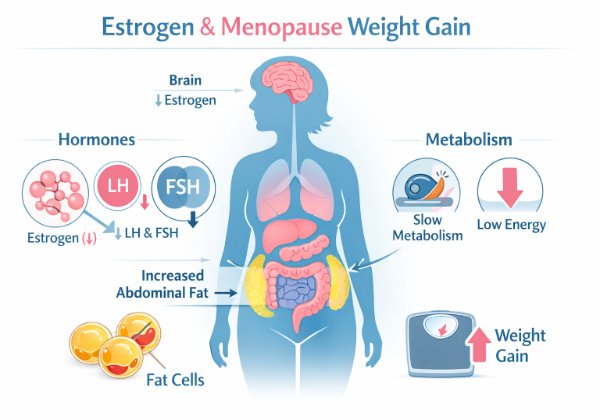
Menopause usually occurs between ages 45 and 55. During this stage, the ovaries gradually reduce the production of estrogen and progesterone. This hormonal decline marks the end of a woman’s reproductive years.
Estrogen influences several functions in the body, including:
- Metabolism and energy balance
- Fat storage and distribution
- Insulin sensitivity
- Muscle maintenance
- Appetite regulation
When estrogen levels drop, these processes start to change. The body becomes more likely to store fat, particularly around the midsection.
Researchers at the Mayo Clinic note that hormonal changes during menopause often lead to increased abdominal fat, even when body weight stays similar to earlier years.
The Science Behind Estrogen Menopause Weight Gain
Many people assume menopause weight gain happens simply because women get older. Age does play a role, but estrogen decline significantly contributes to the shift.
Let’s break down the main biological mechanisms behind estrogen menopause weight gain.
1. Changes in Fat Distribution
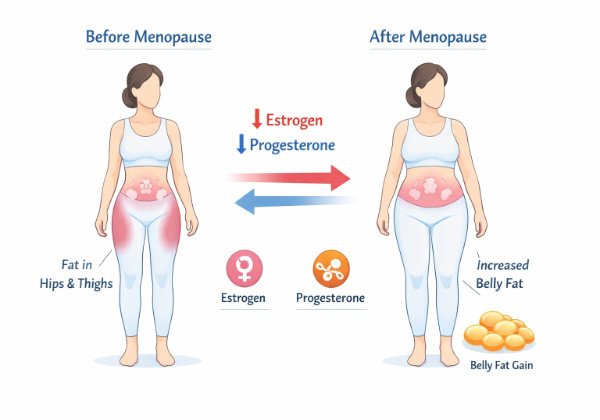
Before menopause, women tend to store fat in the hips and thighs. This pattern often creates the classic “pear-shaped” body.
After menopause, fat distribution changes.
Lower estrogen levels push the body toward a more “apple-shaped” pattern, which means fat accumulates around the abdomen. This shift occurs because estrogen influences how fat cells develop and where they store energy.
A study published in The Journal of Clinical Endocrinology & Metabolism found that postmenopausal women experience a significant increase in visceral fat—the fat stored deep inside the abdominal cavity.
Visceral fat matters because it links strongly with metabolic health risks.
2. Slower Metabolism
Another important factor in estrogen menopause weight gain is metabolic slowdown.
Metabolism refers to how efficiently the body converts food into energy. Several changes during menopause reduce this efficiency.
Lower estrogen levels can:
- Reduce resting metabolic rate
- Decrease muscle mass
- Increase fat storage signals
Muscle burns more calories than fat. As muscle mass declines with age and hormonal changes, the body burns fewer calories at rest.
Even a small metabolic drop can lead to gradual weight gain over time.
3. Increased Appetite and Hunger Signals
Hormones strongly influence appetite. Estrogen interacts with brain regions that regulate hunger and fullness.
When estrogen levels fall, the body may experience:
- Increased hunger signals
- Reduced satiety after meals
- Greater cravings for calorie-dense foods
Researchers have observed that estrogen affects hormones such as leptin and ghrelin, which regulate appetite.
Lower estrogen can disrupt these signals, making it easier to overeat without realizing it.
4. Insulin Sensitivity Changes
Estrogen also helps regulate how the body responds to insulin.
Insulin controls blood sugar levels and plays a key role in fat storage. When insulin sensitivity declines, the body becomes more likely to store excess calories as fat.
During menopause, lower estrogen levels may contribute to reduced insulin sensitivity. This change increases the likelihood of weight gain and metabolic issues.
Several studies published in Diabetes Care show that postmenopausal women face a higher risk of insulin resistance compared with premenopausal women.
5. Sleep Disruptions and Fat Gain
Menopause often disrupts sleep due to symptoms like hot flashes and night sweats.
Poor sleep affects hormones that regulate hunger and metabolism. Research shows that sleep deprivation increases levels of ghrelin (the hunger hormone) and decreases leptin (the fullness hormone).
The result? Increased cravings and higher calorie intake.
Sleep loss also raises cortisol levels, a stress hormone linked to belly fat accumulation.
Why Belly Fat Increases After Menopause
Many women notice that weight gain during menopause appears mostly around the waist.
This type of fat is called visceral fat, and it behaves differently than fat stored under the skin.
Visceral fat surrounds internal organs and produces inflammatory chemicals that can affect overall health.
Hormonal shifts, especially lower estrogen, contribute to this fat pattern by changing how the body stores energy.
Studies from Harvard Medical School confirm that menopause often leads to increased abdominal fat even without significant weight gain.
Is Weight Gain During Menopause Inevitable?
The short answer: no.
Hormonal changes make weight management more challenging, but they do not make weight gain unavoidable.
Lifestyle habits still play a powerful role.
Research shows that women who stay physically active, maintain muscle mass, and follow balanced nutrition patterns often prevent significant weight gain during menopause.
Understanding the hormonal changes simply helps women adapt their strategies.
How to Manage Estrogen Menopause Weight Gain
The goal during menopause should not be extreme dieting. Instead, focus on sustainable habits that support metabolism and hormonal balance.
Here are evidence-based strategies supported by research.
1. Prioritize Strength Training
Muscle mass naturally declines with age, but strength training helps slow this process.
Resistance exercises such as weightlifting, resistance bands, or bodyweight workouts help maintain muscle tissue. More muscle increases metabolic rate and improves insulin sensitivity.
The American College of Sports Medicine recommends strength training at least two times per week for adults.
For menopausal women, this habit can significantly support weight management.
2. Focus on Protein Intake
Protein helps preserve muscle mass and keeps you feeling full longer.
Adequate protein intake becomes especially important during menopause because muscle loss accelerates during this stage.
Foods rich in protein include:
- Fish and seafood
- Eggs
- Greek yogurt
- Lentils and beans
- Lean poultry
Balanced meals with protein, fiber, and healthy fats improve satiety and reduce overeating.
3. Increase Daily Movement
Structured exercise helps, but daily movement matters just as much.
Walking, gardening, cycling, and household activity all increase calorie expenditure. Even small increases in activity can support metabolism over time.
The World Health Organization recommends at least 150 minutes of moderate physical activity per week.
Regular movement also improves mood, sleep, and cardiovascular health.

4. Manage Stress Levels
Chronic stress raises cortisol levels. Elevated cortisol can encourage abdominal fat storage.
Simple habits that help reduce stress include:
- Yoga or stretching
- Meditation or breathing exercises
- Spending time outdoors
- Social connection
Stress management often improves sleep quality as well, which further supports metabolic health.
5. Improve Sleep Quality
Good sleep supports hormonal balance and appetite regulation.
Simple strategies include:
- Keeping a consistent sleep schedule
- Limiting caffeine late in the day
- Maintaining a cool bedroom environment
- Reducing screen exposure before bed
If menopause symptoms severely disrupt sleep, discussing treatment options with a healthcare provider can help.
If you want a structured workout routine designed for midlife metabolism, check out The Best Exercises to Lose Menopause Belly Fat, where we break down the most effective workouts for reducing abdominal fat during menopause.
When to Talk With a Doctor
Weight gain during menopause can sometimes overlap with other health issues.
Women should consult a healthcare professional if they experience:
- Rapid or unexplained weight gain
- Severe fatigue
- Persistent sleep disruption
- Symptoms affecting daily life
Doctors can evaluate hormone levels, metabolic health, and potential treatment options such as hormone therapy.
Hormone therapy may help relieve menopause symptoms for some women, though it is not recommended for everyone. Medical guidance remains essential before considering treatment.
Frequently Asked Questions
Does low estrogen cause weight gain during menopause?
Yes, declining estrogen levels can contribute to weight gain during menopause. Lower estrogen affects metabolism, appetite regulation, and fat distribution in the body. As a result, many women experience estrogen menopause weight gain, especially around the abdomen. Hormonal changes may also reduce muscle mass and slow calorie burning, which makes maintaining weight more challenging.
Why does belly fat increase after menopause?
Belly fat often increases after menopause because estrogen levels drop. Estrogen helps regulate where fat is stored in the body. When estrogen declines, the body tends to store more fat around the abdominal area instead of the hips and thighs. This shift explains why estrogen menopause weight gain commonly appears as increased belly fat.
Can you prevent estrogen menopause weight gain?
Yes, lifestyle habits can help reduce the risk of estrogen menopause weight gain. Strength training helps preserve muscle mass and supports metabolism. Eating balanced meals rich in protein, fiber, and healthy fats can improve satiety and blood sugar control. Regular physical activity, stress management, and good sleep also play important roles in maintaining a healthy weight during menopause.
Does hormone replacement therapy help with menopause weight gain?
Hormone replacement therapy (HRT) may help manage some menopause symptoms, but it is not primarily a weight-loss treatment. Some studies suggest that maintaining estrogen levels through HRT may help reduce abdominal fat accumulation related to estrogen menopause weight gain. However, treatment decisions should always be made with guidance from a healthcare professional.
At what age does menopause weight gain usually start?
Menopause weight gain often begins during perimenopause, which typically starts in a woman’s early to mid-40s. During this transition, estrogen levels fluctuate and gradually decline. These hormonal changes can trigger estrogen menopause weight gain, along with shifts in metabolism and fat distribution.
Final Thoughts
Menopause weight gain can feel confusing and frustrating, but understanding the role of hormones helps explain what’s happening inside the body.
Declining estrogen affects metabolism, appetite regulation, insulin sensitivity, and fat distribution. These changes make abdominal weight gain more common during midlife.
However, estrogen menopause weight gain does not mean weight gain is unavoidable.
Strength training, balanced nutrition, regular movement, stress management, and better sleep all support metabolic health during menopause. Small lifestyle changes often create meaningful results over time.
Most importantly, menopause represents a natural life stage—not a health failure. With the right knowledge and habits, women can maintain strong, healthy bodies well beyond their 40s and 50s.
Sources
- Mayo Clinic – Menopause weight gain
- Harvard Health Publishing – Why women gain belly fat after menopause
- The Journal of Clinical Endocrinology & Metabolism – Visceral fat and menopause
- American College of Sports Medicine – Physical activity guidelines
- World Health Organization – Physical activity recommendations
Author Bio
Jennifer Collins is a wellness researcher and natural health writer focused on adults over 40. With 3+ years of experience in digital health content, Jennifer specializes in making science-backed nutrition and lifestyle strategies easy to follow and apply.
Health Disclaimer
This content is for informational purposes only and is not intended to diagnose, treat, or cure any disease. Always consult your healthcare provider before making changes to your diet or health routine. This article may include affiliate links, which come at no extra cost to you.