
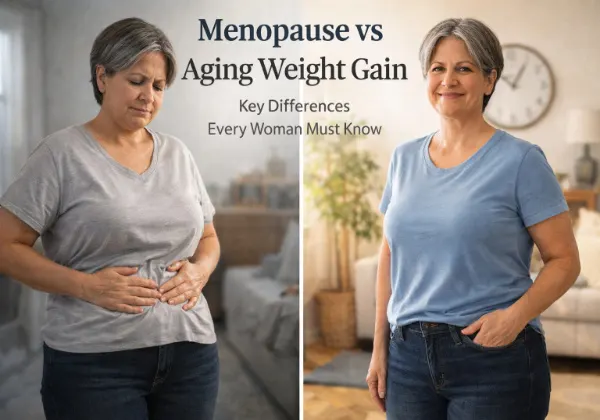
Weight gain after 40 feels confusing. One year your jeans fit fine. The next year, your body seems to have its own plan. Many women ask the same question: Is this menopause weight gain or just normal aging weight gain?
This question matters more than you think. If you understand the difference between menopause vs aging weight gain, you can choose the right strategy instead of wasting time on advice that does not work.
Let’s break it down clearly, logically, and with real science.
Table of Contents
Why This Topic Matters More Than Ever
Women today live longer, work longer, and stay active longer. That also means they experience body changes for a longer time. After age 40, weight gain often feels stubborn. You eat the same. You move the same. But the scale keeps creeping up.
Here is the key point:
Not all weight gain after 40 comes from the same cause.
Some of it comes from aging. Some of it comes from menopause. And yes, they overlap. But they are not identical.
Understanding menopause vs aging weight gain gives you control again.

What Is Aging Weight Gain?
Aging weight gain happens gradually over time. It affects both men and women.
The Main Causes of Aging Weight Gain
As you age, your body naturally changes. These changes affect how you burn calories.
First, your metabolism slows down. Research shows that resting metabolic rate decreases with age. That means your body burns fewer calories even when you do nothing.
Second, you lose muscle mass. This process is called sarcopenia. Muscle burns more calories than fat. So less muscle means slower calorie burning.
Third, your activity level often drops. Many people move less as they get older. Desk jobs, busy schedules, and fatigue all play a role.
Fourth, lifestyle habits shift. Sleep patterns change. Stress increases. These factors influence weight.
How Aging Weight Gain Looks
Aging weight gain tends to be:
- Gradual
- Spread across the body
- Linked to reduced muscle and increased fat
You might notice softer arms, thicker thighs, or a general increase in body fat.
But here is the key: Aging weight gain is usually predictable and slow.
What Is Menopause Weight Gain?
Menopause weight gain is different. It connects directly to hormonal changes.
Menopause typically occurs between ages 45 and 55. During this time, estrogen levels drop significantly.
The Hormonal Shift That Changes Everything
Estrogen does more than regulate your reproductive system. It also affects:
- Fat storage
- Appetite
- Insulin sensitivity
- Energy balance
When estrogen levels fall, your body responds in specific ways.
How Menopause Triggers Weight Gain
First, your body redistributes fat. Instead of storing fat in hips and thighs, it starts storing more in the abdomen.
Second, your body becomes more insulin resistant. This makes it easier to store fat, especially belly fat.
Third, hormonal changes can increase hunger and cravings. Many women notice stronger cravings for sugar or carbs.
Fourth, sleep disruption becomes common. Poor sleep increases hunger hormones like ghrelin.
How Menopause Weight Gain Looksz
- Focused around the belly
- Faster than typical aging gain
- More stubborn to lose
- Linked to hormonal imbalance
Menopause weight gain tends to be:
This is why many women say, “I didn’t change anything, but I gained weight anyway.”

Menopause vs Aging Weight Gain: The Key Differences
Now let’s compare menopause vs aging weight gain clearly.
1. Speed of Weight Gain
Aging weight gain happens slowly over years.
Menopause weight gain can feel sudden. Some women notice changes within months.
2. Fat Distribution
Aging weight gain spreads across the body.
Menopause weight gain targets the abdomen, leading to increased visceral fat.
3. Root Cause
Aging weight gain comes from lifestyle and metabolic decline.
Menopause weight gain comes mainly from hormonal shifts, especially reduced estrogen.
4. Difficulty Level
Aging weight gain responds well to basic diet and exercise changes.
Menopause weight gain often requires more targeted strategies like strength training and hormonal awareness.
Why Belly Fat Increases During Menopause
Let’s talk about the most frustrating part.
That stubborn belly fat.
During menopause, lower estrogen levels shift fat storage toward the abdomen. This type of fat is called visceral fat.
Visceral fat surrounds internal organs. It is more active than subcutaneous fat. It also links to higher risks of:
- Heart disease
- Type 2 diabetes
- Metabolic syndrome
This is why menopause weight gain feels different. It is not just about appearance. It affects health too.
Can You Have Both at the Same Time?
Yes, and this is where many people get confused.
Most women experience both aging weight gain and menopause weight gain together.
You might have:
- Slower metabolism from aging
- Hormonal shifts from menopause
- Reduced activity due to lifestyle
This combination makes weight gain more noticeable and harder to manage.
That is why generic advice often fails.
Common Myths About Menopause vs Aging Weight Gain
Let’s clear up some common misconceptions.
Myth 1: “Weight gain is unavoidable”
Not true. While changes happen, you can manage them with the right approach.
Myth 2: “It is all about calories”
Calories matter, but hormones also play a major role. Ignoring hormones leads to frustration.
Myth 3: “Cardio alone will fix it”
Cardio helps, but strength training plays a bigger role after 40.
What Actually Works for Menopause Weight Gain
Now we move from understanding to action.
Focus on Strength Training
Muscle loss drives both aging and menopause weight gain.

Strength training helps you:
- Build lean muscle
- Boost metabolism
- Improve insulin sensitivity
Even two to three sessions per week can make a big difference.
Prioritize Protein Intake
Protein supports muscle maintenance.
Studies suggest women over 40 benefit from higher protein intake compared to younger years.
Good sources include:
- Eggs
- Greek yogurt
- Lentils
- Chicken
- Fish
Improve Sleep Quality
Poor sleep increases hunger and fat storage.
Try to:
- Maintain a regular sleep schedule
- Reduce screen time before bed
- Avoid caffeine late in the day
Manage Stress
Chronic stress raises cortisol. High cortisol levels promote belly fat.
Simple habits help:
- Walking
- Deep breathing
- Spending time outdoors
Balance Your Diet
You do not need extreme diets.
Focus on:
- Whole foods
- Fiber-rich vegetables
- Healthy fats
- Moderate carbohydrates
Avoid overly restrictive plans. They often backfire.
What Works for Aging Weight Gain
Aging weight gain responds well to basic lifestyle improvements.
Stay Active Daily
Movement matters more than intensity.
Walking, cycling, or yoga helps maintain energy balance.
Maintain Muscle Mass
Strength training applies here too. It is your best defense against muscle loss.
Watch Portion Sizes
As metabolism slows, calorie needs decrease slightly.
Small adjustments can prevent gradual weight gain.

The Overlap Strategy That Works Best
Here is the smartest approach.
Instead of treating menopause vs aging weight gain separately, combine strategies.
Focus on:
- Strength training
- Protein intake
- Consistent movement
- Quality sleep
- Stress management
This approach addresses both causes at once.
If you want to support your body naturally, these 5 Powerful Hormone Balancing Foods Menopause Weight Loss (Backed by Science) can help improve fat loss and reduce stubborn belly weight.
When Should You Be Concerned?
Weight gain alone is common. But certain signs need attention.
Consult a healthcare professional if you notice:
- Rapid unexplained weight gain
- Extreme fatigue
- Irregular symptoms beyond menopause
- Signs of metabolic issues
Sometimes, underlying conditions like thyroid disorders play a role.
The Psychological Side of Weight Gain
Let’s be honest.
Weight gain after 40 can feel frustrating, even unfair.
You might feel like your body stopped cooperating.
But here is a helpful perspective:
Your body is not working against you. It is adapting.
Once you understand menopause vs aging weight gain, you can work with your body instead of fighting it.
Frequently Asked Questions
What is the difference between menopause vs aging weight gain?
The main difference between menopause vs aging weight gain lies in the cause and fat distribution. Aging weight gain happens gradually due to a slower metabolism and muscle loss. Menopause weight gain is driven by hormonal changes, especially lower estrogen levels, which often lead to increased belly fat. While both can occur together, menopause weight gain tends to feel faster and more stubborn
Why does belly fat increase during menopause compared to normal aging?
In menopause vs aging weight gain, menopause causes a noticeable rise in belly fat because estrogen levels drop. This hormonal shift changes how the body stores fat, moving it from the hips and thighs to the abdomen. Aging alone can increase fat over time, but menopause specifically targets the belly area more aggressively.
Is menopause weight gain harder to lose than aging weight gain?
Yes, when comparing menopause vs aging weight gain, menopause-related weight gain is often harder to lose. Hormonal changes can affect insulin sensitivity, appetite, and fat storage, making weight loss slower. Aging weight gain usually responds better to basic lifestyle changes, while menopause weight gain may require more focused strategies like strength training and higher protein intake.
Can you prevent weight gain during menopause and aging?
You can manage both menopause vs aging weight gain with the right habits. Regular strength training, balanced nutrition, good sleep, and stress control help reduce weight gain. While you may not completely prevent changes, you can significantly slow them and maintain a healthy body composition.
At what age does menopause vs aging weight gain typically start?
Aging weight gain can begin in your 30s or 40s as metabolism slowly declines. Menopause weight gain usually starts in the late 40s to early 50s during perimenopause and menopause. In menopause vs aging weight gain, many women notice a sharper increase in weight, especially around the midsection, during this transition.
Final Thoughts: Understanding Changes Gives You Power
Menopause weight gain and aging weight gain are not the same.
Aging slows your metabolism gradually. Menopause shifts your hormones more suddenly.
That difference explains why your old routine might stop working.
The good news?
You do not need extreme solutions. You need smarter strategies.
Focus on strength, nutrition, sleep, and consistency. These habits work with your biology, not against it.
And yes, your favorite jeans can still fit. Maybe even better.
Sources
- National Institute on Aging
- Mayo Clinic – Menopause Weight Gain
- Harvard Health Publishing – Why People Gain Weight as They Age
- North American Menopause Society
- Journal of Midlife Health – Menopause and Metabolic Changes
Author Bio
Jennifer Collins is a wellness researcher and natural health writer focused on adults over 40. With 3+ years of experience in digital health content, Jennifer specializes in making science-backed nutrition and lifestyle strategies easy to follow and apply.
Health Disclaimer
This content is for informational purposes only and is not intended to diagnose, treat, or cure any disease. Always consult your healthcare provider before making changes to your diet or health routine. This article may include affiliate links, which come at no extra cost to you.