
Introduction: Leaks Aren’t Just “Part of Aging” — and You Can Fix Them Naturally
Let’s talk about something that doesn’t get talked about enough — urine leaks.
Whether it’s a sneeze, a laugh, or a quick jog that causes it, bladder leaks can be frustrating and even embarrassing. And if you’re a woman over 40, you’re not alone — over 40% of women in the U.S. experience some form of urinary incontinence.
But here’s the truth:
👉 Leaks are common, but they’re not normal — and not something you have to “just live with.”
Table of Contents
The underlying issue? Often a weakened pelvic floor — a group of muscles that support your bladder, uterus, and bowel.
And guess what helps strengthen them without surgery, medication, or invasive devices?
Yoga.
In this article, you’ll discover 7 Yoga Poses to Strengthen Your Pelvic Floor and reduce leaks naturally.
No experience needed. No equipment. Just 15–20 minutes a day — and real results.
Why Yoga Works for Bladder Leaks
Certain yoga poses naturally:
- Activate pelvic floor and core muscles
- Improve blood flow to pelvic tissues
- Reduce stress, which can worsen urgency symptoms
- Support better posture, which affects bladder pressure
- Help balance hormones, especially post-menopause
One study published in Female Pelvic Medicine & Reconstructive Surgery found that yoga reduced urinary incontinence by over 70% in women who practiced regularly.
So let’s dive into the 7 best poses to get started — safely, gently, and effectively.
🔹 Pose 1: Bridge Pose (Setu Bandhasana)
Why it helps:
Engages the glutes, core, and deep pelvic muscles. Also strengthens the lower back and improves posture.
How to do it:
- Lie on your back with knees bent, feet flat and hip-width apart.
- Inhale and lift your hips, squeezing your glutes.
- Hold for 5–10 breaths while engaging your pelvic floor.
- Lower down slowly. Repeat 3 times.

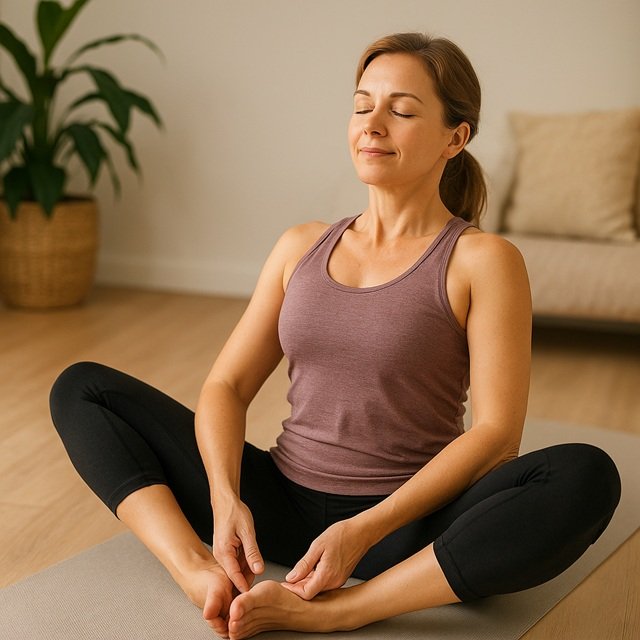
🔹 Pose 2: Butterfly Pose (Baddha Konasana)
Why it helps:
Stretches inner thighs and hips while gently engaging pelvic muscles and relaxing the nervous system.
How to do it:
- Sit on the floor with soles of feet together and knees out to the sides.
- Sit tall and gently press knees toward the floor.
- Hold for 1–2 minutes, breathing deeply.
- Option: Gently lean forward to deepen the stretch.
🔹 Pose 3: Cat-Cow Stretch (Marjaryasana-Bitilasana)
Why it helps:
Improves spinal alignment, activates the deep abdominal and pelvic floor muscles.
How to do it:
- Start on hands and knees.
- Inhale: arch your back (Cow), lifting your head and tailbone.
- Exhale: round your spine (Cat), tucking your chin.
- Repeat for 1–2 minutes with slow, deep breaths.
🔹 Pose 4: Chair Pose (Utkatasana)
Why it helps:
Engages core, thighs, and pelvic floor together — great for functional strength.
How to do it:
- Stand with feet together.
- Inhale and raise arms overhead.
- Exhale and bend your knees as if sitting in a chair.
- Hold for 30 seconds while gently drawing in the pelvic floor.
Tip: Squeeze thighs slightly together for extra activation.
🔹 Pose 5: Legs Up the Wall (Viparita Karani)
Why it helps:
Encourages pelvic relaxation, improves circulation, and relieves pelvic congestion.
How to do it:
- Sit close to a wall and swing your legs up as you lie down.
- Rest arms by your sides and breathe deeply.
- Stay for 3–5 minutes.
🔹 Pose 6: Happy Baby Pose (Ananda Balasana)
Why it helps:
Stretches the hips and lower back while engaging the pelvic floor gently.
How to do it:
- Lie on your back and bring knees toward your chest.
- Grab the outside of each foot and open your knees wide.
- Gently pull feet down while pressing your tailbone into the mat.
- Hold for 1 minute, breathing slowly.
🔹 Pose 7: Seated Pelvic Tilts with Breath
Why it helps:
Connects breath to pelvic floor contraction, helping you learn proper engagement.
How to do it:
- Sit tall in a chair or on a cushion.
- Inhale and relax your belly.
- Exhale and gently lift the pelvic floor muscles (like stopping urine mid-flow).
- Hold for 3–5 seconds.
- Repeat 10–15 times.
Sample 15-Minute Routine for Daily Relief
| Time | Pose |
|---|---|
| 2 min | Seated Pelvic Tilts |
| 2 min | Cat-Cow Stretch |
| 2 min | Butterfly Pose |
| 3 min | Bridge Pose |
| 2 min | Chair Pose |
| 2 min | Happy Baby |
| 2 min | Legs Up the Wall |
Repeat daily or at least 3–4 times a week for best results.
If you want to also lose weight naturally along with supporting your pelvic muscle, please click here
Bonus: Other Natural Ways to Support Pelvic Health
- Stay hydrated — don’t limit water to avoid leaks
- Avoid bladder irritants like caffeine, alcohol, and artificial sweeteners
- Practice diaphragmatic breathing to support the core + pelvic floor
- Strength train to build full-body support
- Add pelvic-safe supplements like pumpkin seed extract, magnesium, and herbs like horsetail
Free Guide + Supplement
💡 Want More Ways to Support a Healthy Bladder — Naturally?
We’ve created a free, easy-to-follow guide for women 40+:
“5 Natural Ways to Support a Healthy Bladder in Women”Inside, you’ll learn:
✔ Daily foods that calm your bladder
✔ Poses that reduce pressure
✔ A clean, trusted supplement that supports bladder control without side effects👉 Click here to download the FREE guide
Many women also trust this doctor-reviewed, plant-based supplement for added pelvic support:
👉 Check it out here
(No hype. Just simple, science-backed wellness.)
Final Thoughts: Gentle Moves, Big Relief
Pelvic floor weakness is common, but not something you have to live with.
By practicing these gentle yoga poses just a few minutes a day, you can:
- Reduce leaks
- Strengthen deep supportive muscles
- Regain confidence
- And feel more in control — without surgery, pills, or pads
Small steps make a big difference. Start today — your future self will thank you.
Author Bio:
Written by Jennifer Collins
Jennifer is a digital wellness researcher and content creator who specializes in natural health strategies for adults over 40. With a focus on bladder health, women’s wellness, and yoga-based movement, she provides evidence-backed insights to help you feel stronger, longer.
Health Disclaimer:
This article is for informational purposes only and is not intended to substitute professional medical advice or diagnosis. Always consult your healthcare provider before beginning any new exercise or supplement routine. Some links may be affiliate links, meaning we may earn a small commission at no extra cost to you.